
Commercial kitchen management has undergone a permanent structural transformation over recent years. As traditional labor shortages, volatile food costs, and surging digital order volumes squeeze baseline profit margins, traditional paper-ticket workflows are no longer viable for high-volume service environments.
Industry data from the National Restaurant Association indicates that restaurant technology adoption has shifted from a competitive luxury to a fundamental survival mechanism, with automation directly safeguarding operational efficiency during peak service hours.
Modern commercial kitchens must process dine-in tickets, third-party delivery orders, and mobile app requests simultaneously without sacrificing ticket times or food quality. To achieve this level of synchronization, restaurant operators deploy sophisticated kitchen automation infrastructure that replaces physical paper rails with intelligent digital workflows.
These platforms coordinate prep stations, track cooking times in real-time, and eliminate manual communication errors between the front and back of the house.
Whether managing a high-volume fast-casual concept or an enterprise multi-unit chain, implementing the right kitchen automation infrastructure ensures operational speed, accountability, and long-term financial viability.
What Is a Kitchen Automation System?
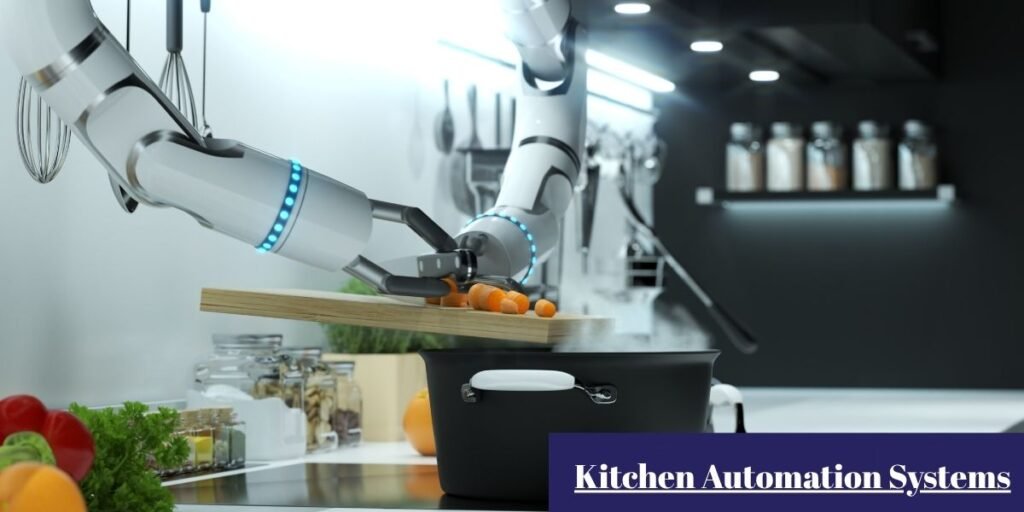
A kitchen automation system functions as an integrated network of hardware and software designed to streamline back-of-house food preparation, order routing, and workflow management. At its core, the technology replaces traditional paper tickets and kitchen printers with digital screens known as Kitchen Display Systems (KDS).
When a server inputs an order into the point of sale, the automation software processes the data instantly and routes specific menu items to the appropriate prep station, such as the grill, fryer, salad bar, or sauté station.
Advanced platforms go far beyond basic digital ticketing by incorporating intelligent order timing, recipe management, automated inventory deductions, and equipment monitoring. By utilizing cloud connectivity and smart routing logic, these systems ensure that multi-course meals or complex orders finish cooking at the exact same moment, drastically reducing ticket times and eliminating kitchen bottlenecks during rush hours.
Why Restaurants Are Investing in Kitchen Automation
Operating a modern commercial kitchen profitably requires eliminating waste, reducing labor friction, and accelerating table turns. Manual ticket handling introduces human error, miscommunication, and misplaced papers, leading to delayed food, wasted ingredients, and frustrated guests.
Kitchen automation systems solve these structural inefficiencies by providing complete operational visibility across the entire back of house. With real-time analytics tracking average ticket times and station performance, executive chefs can identify operational bottlenecks and adjust staffing levels accordingly.
Furthermore, integrated waste tracking and inventory controls ensure that high-priced proteins and produce are used efficiently, protecting restaurant profit margins from creeping food costs. As consumer expectations for speed and accuracy continue to climb, automation provides the reliable backbone needed to scale restaurant operations successfully.
15 Best Kitchen Automation Systems for Busy Restaurant Kitchens
1. Toast Kitchen Display System
Toast transforms cluttered paper ticket lines into a streamlined digital kitchen workflow designed for speed and accuracy. The system relies on proprietary Android-based hardware terminals and cloud software to route items instantly to designated kitchen stations based on pre-configured timing rules.
Pricing typically involves a base software tier starting around $69 to $110+ per month, alongside hardware costs ranging from $599 to $1,199 per KDS terminal and mandatory integrated payment processing fees averaging 2.49% to 2.99% plus $0.15 per transaction.
Growing fast-casual and full-service restaurants rely on Toast because its native ecosystem eliminates the need for messy third-party middleware integrations. Notable ecosystem advantages include deep integration with inventory tracking, labor management, and online ordering platforms, making it a powerful solution for multi-station concepts.
2. Oracle MICROS Simphony Kitchen Display System
Enterprise restaurant brands require robust infrastructure capable of managing thousands of transactions across multiple time zones. Oracle MICROS Simphony delivers this enterprise-grade scalability through centralized kitchen management, advanced cloud capabilities, and open APIs that support over 200 integrations.
The software utilizes robust SQL databases and enterprise back-office analytics to standardize recipes, monitor cross-location performance metrics, and maintain rigid quality control. Pricing is quote-based, with base workstation subscriptions starting around $55 per month per workstation, alongside proprietary enterprise hardware and customized processing agreements.
Prominent enterprise deployments include massive hospitality groups, international hotel chains, and major sports stadium concessions where centralized automation provides unmatched data reliability.
3. QSR Automations ConnectSmart Kitchen
ConnectSmart coordinates complex kitchen production rather than simply displaying incoming orders on a screen. The software utilizes intelligent order routing and advanced production timing algorithms to sequence food preparation so that all items for a table finish simultaneously, even when cooking times vary wildly between stations.
With integrations spanning over 80 different point-of-sale systems, including enterprise platforms like Crunchtime and Aloha, the platform helps major brands like Chili’s Bar and Grill and The Cheesecake Factory shave minutes off average ticket times.
Pricing is structured through customized enterprise software licensing tiers, making it an essential tool for high-volume concepts that demand absolute precision and speed.
4. Square Kitchen Display System
Independent restaurants, neighborhood cafés, and high-volume food trucks need automation tools that balance capability with simplicity. Square provides an accessible entry point to digital kitchen workflows through an affordable, app-based interface running on standard commercial Android or iOS tablets.
Square KDS is priced at $30 per month per device when paired with Square Plus ($69/month per location) or $20 per month per device under Square Premium ($165/month per location).
Rather than focusing on complex enterprise configurations, Square prioritizes rapid deployment, intuitive staff training, and seamless native synchronization with the broader Square POS ecosystem without requiring expensive proprietary hardware installations.
5. Restroworks
Restroworks extends far beyond standard kitchen display capabilities by unifying inventory control, restaurant operations, deep analytics, and order management into a single platform. The software connects front-of-house sales data directly with back-of-house inventory depletion, giving managers automated alerts for low stock and real-time food cost variances.
Pricing operates on a tiered SaaS subscription model scaled by location count and active module requirements.
This comprehensive approach makes Restroworks an ideal solution for growing restaurant groups seeking centralized visibility over their entire operational footprint.
6. Deliverect
Managing online orders from a dozen different delivery apps can quickly overwhelm a traditional kitchen staff. Deliverect solves this logistical challenge by consolidating third-party delivery platforms into a single, unified kitchen workflow.
The software automatically injects orders directly into the POS and KDS using cloud APIs, eliminating manual tablet entry and the human errors that come with it.
Pricing is based on monthly subscription tiers scaled by order volume and location count, helping high-volume digital takeout and delivery brands streamline dispatching and menu updates.
7. Lightspeed Restaurant
Lightspeed combines powerful point-of-sale technology with robust operational automation designed specifically for the hospitality sector. The platform offers comprehensive reporting capabilities, multi-location inventory management, and intuitive floor plan customization that simplifies day-to-day restaurant administration.
Kitchen staff benefit from clear order routing and customizable ticket displays that adapt to changing menu items and modifier options.
Pricing starts around $69 to $399+ per month depending on the feature tier, delivering consistent performance for hospitality businesses seeking an all-in-one ecosystem.
8. TouchBistro Kitchen Display System
Independent full-service restaurants often choose TouchBistro for its focus on workflow simplicity and seamless server-to-kitchen communication. The platform bridges the gap between the dining room and the line cooks, allowing servers to course meals and send modifications instantly using reliable iPad-based hardware.
Pricing for the KDS add-on integrates into TouchBistro core subscription plans, which typically start around $69 per month plus software add-on fees.
Practical benefits include straightforward setup, reliable offline mode functionality, and easy-to-read ticket formats that reduce training time for new kitchen staff in growing bistros and pizzerias.
9. Kitchen Brains
Kitchen Brains operates as a specialized platform for managing connected commercial kitchen equipment across multi-unit chains. Instead of focusing solely on order tickets, the system monitors equipment health via IoT sensors, automates programmable cooking workflows, and manages facility energy consumption.
Quick-service chains use Kitchen Brains to ensure food safety compliance through automated temperature logging and predictive maintenance alerts.
Pricing is quote-based depending on equipment connectivity scale, preventing unexpected equipment breakdowns during peak service hours.
10. RATIONAL ConnectedCooking
RATIONAL ConnectedCooking functions as an advanced connected cooking ecosystem rather than standard kitchen software. Commercial kitchens utilize the platform for remote combi-oven management, cloud-based recipe synchronization, and automated HACCP documentation.
Chefs can push standardized recipes across multiple kitchen locations simultaneously, guaranteeing absolute culinary consistency.
Access to the ConnectedCooking platform is generally included with network-enabled RATIONAL iCombi and iVario equipment, ensuring that expensive cooking appliances operate at peak efficiency.
11. Winnow Vision
Winnow Vision applies advanced computer vision and artificial intelligence to identify and measure food waste automatically during prep and plate-scraping processes. By capturing visual data of discarded food using smart camera hardware mounted over waste bins, the system helps commercial kitchens track exactly what ingredients are being wasted and why.
Pricing is structured around monthly SaaS fees tied to kitchen scale and waste volume analysis.
Kitchens utilizing Winnow typically see substantial reductions in food cost variances within the first few months of deployment, improving both profitability and environmental sustainability.
12. Miso Robotics Flippy
Flippy brings robotic cooking automation directly to high-volume commercial fry stations and grill lines. Utilizing advanced robotics, high-definition sensors, and computer vision, Flippy handles repetitive, high-heat tasks such as frying french fries, dropping baskets, and managing grill surfaces with precise timing.
Quick-service restaurants and high-volume sports venues deploy Flippy through robotics-as-a-service (RaaS) leasing models involving substantial monthly subscription and installation fees.
This robotic automation absorbs repetitive labor burdens, maintains strict product consistency, and protects staff from kitchen burn hazards during severe labor shortages.
13. Chef Robotics
Chef Robotics focuses on automated food assembly rather than robotic cooking. Utilizing advanced machine learning algorithms and computer vision, the system handles delicate ingredient handling, precise portion control, and repetitive meal assembly in high-volume production kitchens.
Prepared meal companies, commissaries, and institutional feeding operations rely on Chef Robotics via specialized enterprise lease agreements to maintain strict gram-level portion consistency across thousands of identical meals.
14. Hyphen
Hyphen provides automated meal assembly technology engineered specifically for high-volume food preparation and digital brand execution. The system automates the assembly of bowls, salads, and customizable meals with incredible speed and precision.
Ghost kitchens, virtual restaurant brands, and high-volume catering facilities utilize Hyphen through commercial lease agreements to scale output without linearly increasing labor costs.
15. Middleby Automation Solutions
Middleby offers a broad automation ecosystem encompassing a vast portfolio of connected kitchen equipment and integrated food service solutions. Rather than delivering a single standalone software product, Middleby integrates automated cooking lines, intelligent refrigeration, and conveyor systems into a unified commercial kitchen layout.
Large-scale food service operations, chain restaurants, and institutional facilities rely on Middleby’s enterprise pricing and equipment infrastructure to build highly efficient, automated kitchens.
Which Kitchen Automation System Is Right for Your Restaurant?
Quick-Service Restaurants
Quick-service operations require lightning-fast order processing, minimal training time, and rugged hardware that withstands grease and heat. Systems like Square KDS or Toast provide the rapid ticket bumping and clear visual cues necessary to keep drive-thru and counter queues moving without delay.
Full-Service Restaurants
Sit-down restaurants dealing with multi-course meals, complex modifiers, and table pacing need advanced routing logic. Platforms such as QSR Automations ConnectSmart or Toast allow chefs to hold courses, coordinate station timing, and communicate seamlessly with floor staff.
Cloud Kitchens and Delivery-First Businesses
Ghost kitchens and delivery-centric operations live and die by their ability to aggregate multiple third-party channels. Integrations via Deliverect combined with automated assembly tech like Hyphen ensure high-volume takeout orders flow into production without manual tablet entry.
Hotel and Institutional Kitchens
Hotels, hospitals, and corporate dining facilities managing diverse menus and strict compliance standards benefit from enterprise ecosystems like Oracle MICROS Simphony and Kitchen Brains, which offer centralized multi-unit control and automated temperature logging.
Large Restaurant Chains
Enterprise chains operating across multiple states require centralized menu management, standardized reporting, and rugged hardware durability. Oracle MICROS and Restroworks provide the multi-location oversight necessary to maintain corporate brand standards.
Small Independent Restaurants
Cafes, food trucks, and single-unit bistros need low-friction, cost-effective automation that eliminates paper tickets without breaking the bank. Square KDS and TouchBistro offer straightforward, tablet-based setups with minimal monthly overhead.
Traditional Automation vs AI-Powered Kitchen Automation Systems
Understanding the operational differences between traditional rule-based automation and modern artificial intelligence is critical for making a smart capital investment. Traditional kitchen automation relies on fixed, rule-based workflows where incoming POS orders trigger static digital displays, color-coded timer alerts, and manual station routing based on pre-programmed recipes.
These traditional systems excel at replacing paper tickets, standardizing station communication, and providing reliable, predictable workflows for standard restaurant concepts. In contrast, AI-powered kitchen automation introduces dynamic intelligence through computer vision, predictive analytics, machine learning, and robotic food preparation.
Artificial intelligence can forecast hourly customer demand based on historical weather, local events, and sales data, allowing kitchens to prep exact quantities of ingredients ahead of time. Furthermore, AI-driven computer vision systems like Winnow Vision or robotic assembly platforms like Chef Robotics actively monitor food quality, identify waste patterns in real-time, and execute physical cooking tasks without human intervention.
To help clarify your purchasing decisions, kitchen automation platforms generally fall into two distinct technological categories:
Traditional Rule-Based Automation Systems:
- Toast Kitchen Display System
- Oracle MICROS Simphony KDS
- QSR Automations ConnectSmart Kitchen
- Square Kitchen Display System
- Restroworks
- Deliverect
- Lightspeed Restaurant KDS
- TouchBistro Kitchen Display System
- Kitchen Brains
- RATIONAL ConnectedCooking
- Middleby Automation Solutions
AI-Powered & Advanced Robotic Systems:
- Winnow Vision (Computer vision food waste tracking)
- Miso Robotics Flippy (Robotic frying and grilling automation)
- Chef Robotics (Machine learning automated food assembly)
- Hyphen (Automated modular meal assembly and dispensing)
Operators should invest in AI-powered automation when labor scarcity, extreme order volumes, and high ingredient costs demand advanced optimization, whereas traditional KDS solutions remain more than sufficient for standard independent restaurants seeking basic paperless efficiency.
Key Factors to Consider Before Investing in a Kitchen Automation System
Operational Challenges You Want to Solve
Identify your primary kitchen pain point before reviewing vendor proposals. If your main issue is lost paper tickets during Friday night rushes, a simple digital KDS is sufficient.
If your challenge is excessive food waste or severe staffing shortages, you may need AI-driven inventory tracking or robotic assistance.
Restaurant Size and Service Model
Your physical layout and service style dictate your technology needs. A counter-service coffee shop requires a radically different display setup than a multi-station fine dining brigade or a high-volume ghost kitchen.
Integration with Existing POS and Business Software
Your kitchen automation system must communicate flawlessly with your point of sale, online ordering platforms, and inventory software. Choosing a native ecosystem or a platform with robust API integrations prevents data silos and operational lag.
Ease of Implementation and Staff Adoption
Complex software that requires weeks of intensive training will face resistance from kitchen staff. Look for intuitive user interfaces, clear color-coded alerts, and touch-screen responsiveness that cooks can master within a single shift.
Scalability as the Business Grows
Ensure that the software and hardware architecture can grow with your business. If you plan on opening a second or third location next year, your chosen platform must support multi-unit management without requiring a complete system replacement.
Vendor Support and Long-term Software Updates
Commercial kitchens are brutal environments for electronics, and software bugs can halt service instantly. Verify the vendor’s SLA, customer support availability, and frequency of over-the-air software updates before signing an agreement.
Total Cost of Ownership and Expected Return on Investment
Look beyond initial hardware costs to calculate ongoing monthly software fees, payment processing markups, and potential implementation expenses. A slightly more expensive system that cuts your food waste by 3% and speeds up table turns by two minutes will deliver a rapid return on investment.
Frequently Asked Questions
What is a kitchen automation system?
A kitchen automation system is an integrated technology platform comprising hardware displays and software logic that replaces paper tickets with digital orders, manages station routing, tracks cooking times, and automates back-of-house operational workflows.
Which kitchen automation system is best for restaurants?
The best system depends entirely on your restaurant concept. Toast and QSR Automations lead the market for full-service and multi-station concepts, while Square is ideal for small independent cafes and food trucks.
How much does a kitchen automation system cost?
Pricing varies widely based on architecture. Tablet-based KDS software like Square starts around $20 to $30 per device monthly, while enterprise-grade multi-station setups like Oracle MICROS involve quote-based enterprise licensing, dedicated hardware, and customized processing fees.
Are AI-powered kitchen automation systems better than traditional systems?
AI-powered systems are superior for high-volume, enterprise, or waste-heavy operations requiring predictive analytics and computer vision, whereas traditional rule-based systems are more cost-effective for standard restaurants needing basic paperless efficiency.
Can small restaurants benefit from kitchen automation?
Yes. Small restaurants utilizing simple tablet-based KDS solutions eliminate order miscommunication, speed up ticket execution, and present a more professional, organized kitchen workflow during peak hours.
Which kitchen automation systems integrate with POS software?
Major platforms such as Toast, Square, Lightspeed, and Oracle MICROS feature native POS integrations, while third-party systems like Deliverect and QSR Automations use robust API connections to sync data across diverse POS ecosystems.
What types of restaurants benefit most from robotic kitchen automation?
Quick-service restaurants, high-volume fast-casual chains, and institutional commissaries benefit most from robotic automation like Miso Robotics Flippy or Chef Robotics because they handle repetitive, high-heat tasks and ensure exact portion consistency.
How long does it take to implement a kitchen automation system?
Implementation timelines range from a few hours for plug-and-play tablet systems in small cafes to several weeks for complex, multi-station enterprise rollouts involving custom POS integrations and staff training programs.