
Bermuda grass (Cynodon dactylon) is a tough, warm-season perennial grass that creates a dense, low-growing carpet across sunny landscapes. Known for its grayish-green to deep emerald blades and creeping growth habit, it spreads aggressively using both aboveground runners (stolons) and underground stems (rhizomes).
Learning to identify Bermuda grass matters because its unique growth characteristics make it a double-edged sword for homeowners. While it creates an exceptionally durable, wear-resistant lawn that thrives in scorching summer heat, its invasive nature means it will quickly crawl into flower beds, vegetable gardens, and sidewalk cracks if left unchecked. Knowing what it looks like at different stages helps you manage it effectively, whether you are trying to cultivate a pristine lawn or clear an unwanted weed from your garden borders.
What Does Bermuda Grass Look Like?
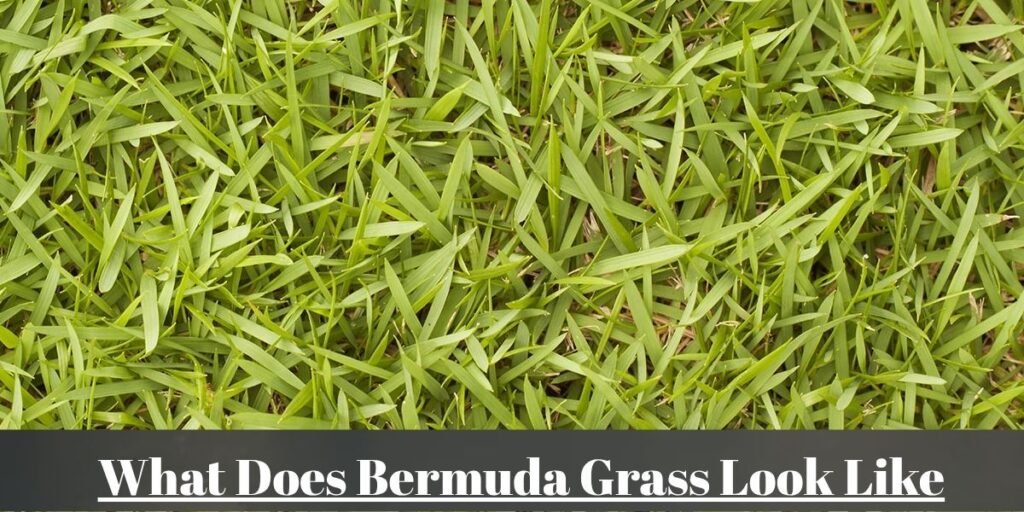
When actively growing, Bermuda grass forms a thick, tightly woven mat of foliage. Its leaf blades are relatively narrow, usually measuring between 2 to 6 millimeters wide and extending 2 to 15 centimeters in length. Each blade tapers down to a sharp, pointed tip, growing out from flattened sheaths at a distinct open angle.
The exact visual appearance of Bermuda grass depends heavily on the specific variety and how well the lawn is maintained. Common Bermuda grass tends to have wider blades, a somewhat lighter green hue, and a coarser texture with lower shoot density. In contrast, modern hybrid varieties engineered for lawns and golf courses feature fine-textured, deep emerald blades that pack together so tightly they form a smooth, uniform sod. In a young or patchy lawn, you will see long, thread-like stems reaching across bare soil, rooting at intervals and sending up small tufts of upright blades. Once fully established, those runners intertwine to completely cover the ground.
Seasonal changes dramatically alter the look of a Bermuda grass lawn. Throughout the late spring and summer months, a healthy yard stays rich green and lush. However, as autumn temperatures drop and soil cools below 50°F (10°C), the plant stops producing chlorophyll and enters winter dormancy. During this dormant period, the entire lawn turns a uniform straw-brown color. While it may look dead, the roots and rhizomes remain fully alive beneath the surface, waiting for warm spring weather to turn the lawn green again.
How to Identify Bermuda Grass by Its Leaves, Runners, and Seedheads
Distinguishing Bermuda grass from look-alikes like Crabgrass, Zoysia, or St. Augustinegrass requires looking closely at a few specific botanical features on the plant itself.
The leaves themselves offer the first clue. Bermuda grass blades are flat, narrow, and feel relatively smooth or faintly hairy on top, tapering to a prominent point at the tip. They grow off wire-like stems that branch out horizontally across the soil.
The creeping runners are perhaps the easiest way to identify Bermuda grass in the field. The plant uses aboveground runners called stolons to stretch across the soil surface, pinning themselves down with small roots wherever a node touches the ground. At the same time, underground stems known as rhizomes travel horizontally beneath the topsoil, pushing up fresh shoots every few inches. This dual-spreading habit creates a web of tough, stringy stems that can be difficult to pull up by hand.
If the grass is allowed to grow without mowing for a week or two, it will produce a very distinctive seedhead that looks like a small bird’s foot or a mini windmill. The seedhead features 3 to 7 narrow spikes radiating outward from the top of a slender stem, with each individual spike measuring 1 to 2 inches long.
For positive identification, you can check a tiny botanical detail called the ligule, located right where the leaf blade meets the main stem sheath. If you pull a leaf blade back slightly, Bermuda grass reveals a tiny ring of small, white hairs instead of a smooth membrane. This hairy fringe is a reliable way to distinguish Bermuda grass from similar broadleaf weeds or look-alike grasses.
What Does Bermuda Grass Feel Like Underfoot?
The physical feel of a Bermuda grass lawn varies based on how closely it is mowed and which variety is planted. A well-maintained hybrid Bermuda lawn cut to a standard height of 1 to 2 inches feels springy, firm, and dense under bare feet. Because the blades and creeping runners knit together so tightly, the turf acts almost like a natural cushion that absorbs heavy foot traffic.
On the other hand, common Bermuda grass or an unkempt lawn feels noticeably coarser and stiffer underfoot. If the grass is allowed to grow too tall, the lower stems become woody and tough, making it less comfortable to walk on barefoot. However, that same tough vascular structure gives Bermuda grass its famous durability, which is why it is used so widely on athletic fields, playgrounds, and park facilities where feet are constantly grinding into the turf.
How Bermuda Grass Spreads and Changes Through the Year
Bermuda grass follows a predictable growth cycle driven entirely by ambient air and soil temperatures. In early to mid-spring, when soil temperatures consistently reach 55°F to 60°F (13°C to 15°C), the dormant brown lawn breaks open with tiny green shoots as root activity wakes up.
Peak growth occurs during the hottest months of summer. When daily air temperatures sit between 85°F and 95°F (29°C to 35°C), Bermuda grass spreads at a rapid pace, sending stolons skittering across bare dirt and filling in thin spots quickly. During this period, the lawn demands regular mowing to keep the aggressive runners from climbing over edging borders, driveway seams, and garden walls.
As days shorten and cool autumn weather arrives, growth slows down significantly, and the grass shifts its energy toward storing carbohydrates in its underground rhizomes. Once a hard frost hits or temperatures remain consistently cold, the green top growth completely dies back to a dormant straw color. Telling dormant grass from dead grass is simple: dormant Bermuda grass stays firmly anchored in the ground by a healthy root system, whereas dead turf peels away from the dirt effortlessly.
Is Bermuda Grass a Good Choice for Your Lawn?
Deciding whether to plant or maintain a Bermuda grass lawn comes down to evaluating your property’s specific environment, how you use your yard, and how much time you want to spend on yard work. It is an exceptional grass under the right conditions, but it can quickly become a headache in the wrong setting.
Full, unfiltered sunlight is the single most important requirement for a thriving Bermuda grass lawn. Properties with wide-open backyards, minimal tree cover, and full southern exposure provide the ideal conditions for this grass to form a dense, healthy turf. However, if your yard is filled with mature shade trees, high privacy fences, or narrow side yards blocked by neighboring houses, Bermuda grass will struggle. In areas receiving less than 6 to 8 hours of direct sunlight daily, the grass thins out, grows leggy, and eventually dies off, leaving behind bare dirt patches open to weed invasion.
Bermuda grass excels in yards that see heavy outdoor activity. If you have children playing sports, dogs running back and forth along fence lines, or host frequent backyard gatherings, Bermuda grass withstands the abuse better than almost any other warm-season turf. When damaged, its creeping runners quickly fill in bare spots and worn footpaths without requiring re-seeding.
Summer heat tolerance is another standout strength. During the hottest months of the year, when cool-season grasses scorch and enter heat dormancy, Bermuda grass reaches its peak growing phase. While maintaining a lush green appearance during severe drought still requires supplemental irrigation, the grass possesses a deep root system that allows it to survive long dry spells by going temporarily dormant, bouncing back rapidly once water returns.
The tradeoff for this durability and heat tolerance is maintenance. Because it grows so aggressively during summer, a Bermuda grass lawn requires frequent mowing, typically every 3 to 5 days during peak heat, to prevent scalping and keep the runners under control.
The Advantages of Growing Bermuda Grass
Choosing Bermuda grass offers several clear practical benefits for sunny, high-use properties:
- Unmatched Heat and Sun Tolerance: Thrives in intense summer heat and full sun where other grass species wilt or struggle.
- Exceptional Wear Recovery: Rapidly heals from physical damage, foot traffic, and pet activity thanks to its dual stolon and rhizome network.
- Superior Drought Survival: Deep root architecture enables the plant to survive extended dry periods without permanent turf loss.
- Natural Weed Suppression: Forms a dense, interwoven sod when properly fertilized and mowed, blocking weed seeds from receiving light and taking root.
- Versatile Establishment Options: Can be established from seed, sod, sprigs, or plugs depending on the specific variety and budget.
The Drawbacks Homeowners Should Consider Before Planting Bermuda Grass
Despite its strengths, Bermuda grass presents distinct maintenance and aesthetic challenges that catch many homeowners off guard:
- Invasive Creeping Habit: Aboveground stolons and underground rhizomes constantly breach landscape edging, requiring frequent edging and hand-weeding in flower beds.
- Poor Shade Tolerance: Fails to sustain density in shaded areas, under tree canopies, or along northern building walls.
- High Mowing Frequency: Demands regular cutting during summer to prevent a stalky, uneven appearance and excessive thatch buildup.
- Winter Dormancy Brownout: Turns a dull, straw-brown color for several months during winter, leaving the lawn looking dead until warm spring weather returns.
- Thatch Accumulation: Vigorous lateral growth creates a thick layer of organic thatch over time that requires periodic power raking or core aeration.
How Much Sun, Water, and Maintenance Does Bermuda Grass Need?
Maintaining a healthy Bermuda grass lawn requires aligning your care routine with the plant’s seasonal needs. Full sun is non-negotiable; aim for at least 8 hours of direct sun daily for optimal density.
Watering requirements vary depending on whether your goal is simple survival or a dark green, lawn-of-the-month appearance. To maintain active green growth during summer, Bermuda grass needs roughly 1 to 1.25 inches of water per week, delivered in deep, infrequent irrigation sessions that encourage deep root development. During extended droughts without watering, the grass will turn brown and go dormant to protect its crown and roots, surviving on very little water until rainfall resumes.
Mowing requires close attention during peak growth. Common varieties should be cut to a height of 1.5 to 2 inches, while fine-textured hybrid varieties perform best when maintained shorter, between 0.75 and 1.5 inches. Never remove more than one-third of the leaf blade in a single mowing session, as removing too much foliage at once exposes the woody lower stems, leaving unsightly brown patches.
Nutrient demands are moderate to high during active summer growth. Applying 1 pound of nitrogen per 1,000 square feet every 4 to 6 weeks during late spring and summer keeps the lawn dense and vibrant. Avoid applying nitrogen fertilizer too early in spring before the grass breaks dormancy, or too late in autumn, which can make the turf vulnerable to winter injury.
Bermuda Grass vs. Other Lawn Grasses: Which Is Better for Your Yard?
Comparing Bermuda grass to other popular warm-season and cool-season turfgrasses highlights where it shines and where alternatives might better suit your yard.
Bermuda Grass vs. Zoysia Grass
Zoysia grass shares Bermuda’s warm-season lifecycle and excellent heat tolerance, but it grows much slower. Zoysia offers superior shade tolerance and produces a softer, denser carpet underfoot. However, Zoysia takes much longer to establish and recovers far more slowly from severe wear or disease damage compared to Bermuda’s rapid regrowth.
Bermuda Grass vs. St. Augustinegrass
St. Augustinegrass features much broader leaf blades and a lush, carpet-like texture. It is far more shade-tolerant than Bermuda grass, making it the preferred choice for warm-climate lawns with large oak trees or shaded side yards. However, St. Augustinegrass cannot handle heavy foot traffic as well as Bermuda and can only be established via sod or plugs, not seed.
Bermuda Grass vs. Tall Fescue
Tall Fescue is a cool-season grass that stays green throughout most of the winter in transition zones where Bermuda turns straw-brown. Fescue handles partial shade much better than Bermuda, but it struggles in intense, prolonged summer heat, requiring significant summer watering and periodic overseeding to recover from heat stress.
Bermuda Grass vs. Kentucky Bluegrass
Kentucky Bluegrass is a premier cool-season grass prized for its fine texture and rich color in northern climates. While it spreads via rhizomes similarly to Bermuda, Bluegrass cannot survive the sustained heat and humidity of southern summer zones, where Bermuda thrives naturally.
Which Bermuda Grass Variety Should You Plant?
Choosing between common Bermuda grass and hybrid varieties impacts your lawn’s appearance, maintenance demands, and installation cost.
Common Bermuda grass (Cynodon dactylon) produces a coarser lawn with wider blades and lighter green color. Its main advantage is affordability and ease of establishment, as it can be easily planted from seed. It is widely used for pasture, large acreage residential lawns, and low-maintenance areas where absolute visual perfection is not required.
Hybrid Bermuda grass cultivars (such as Tifway 419, Celebration, or TifTuf) are sterile hybrids engineered for exceptional density, fine texture, deep emerald color, and enhanced drought or wear tolerance. Because hybrids do not produce viable seeds, they must be established using sod, sprigs, or plugs. Hybrid varieties create a golf-course quality lawn but require more frequent mowing, precise fertilizing, and structured maintenance to look their best.
How to Establish a Bermuda Grass Lawn Successfully
Starting a new Bermuda grass lawn requires timing your installation with the plant’s active growth period. The best time to plant Bermuda grass is in late spring or early summer, when soil temperatures consistently exceed 70°F (21°C) and ambient temperatures are warm.
Begin by clearing the area of all existing weeds and debris, then grade the soil to ensure proper drainage away from structures. Soil testing is recommended to adjust pH levels to Bermuda’s ideal range of 6.0 to 7.0.
If planting from seed, rake the surface lightly, distribute seed at a rate of 1 to 2 pounds per 1,000 square feet, and roll the seedbed gently to ensure good seed-to-soil contact. For sod installation, lay the turf rolls tightly together in a staggered brick pattern, rolling the installed sod to eliminate air pockets beneath the roots.
Keep the top inch of soil consistently moist during the first 2 to 3 weeks of establishment. Once the new roots anchor firmly into the soil, gradually reduce watering frequency while increasing session depth to encourage a deep, resilient root system.