
When someone sets out to upgrade their property, the common instinct is often to buy more plants, stack decorative pots everywhere, or lay down fresh sod and hope for the best.
In my years of designing residential landscapes, I have learned that true curb appeal is never about cluttering your yard with green mass. It is a precise exercise in geometry, architecture, and ecology.
Whether you are managing a cramped urban postage-stamp lawn, a sprawling suburban half-acre, or a steep hillside that threatens to wash away every time it storms, the secret to a high-impact front yard lies in tailoring your layout directly to your home’s unique footprint, local sunlight patterns, and your actual maintenance capacity.
The professional landscape concepts outlined below move past generic advice. They provide field-tested design strategies that professional horticulturists and landscape architects use to harmonize structural hardscaping, manage problematic topography, and elevate property values without creating an endless weekend maintenance trap.
Before You Start, Match the Design to Your Yard
Skipping the initial site analysis is the single biggest reason DIY landscaping projects fail within two years. Before you dig a single hole or purchase a single flat of perennials, you must audit your property’s physical realities.
- Yard size and spatial proportions: A sprawling, mature oak tree will completely overwhelm a modern cottage with a ten-foot front setback, whereas a tiny dwarf shrub will look lost on a grand two-story colonial estate. Scale your plantings to match your architectural mass.
- Sunlight mapping: Track how sunlight moves across your front yard across different seasons. A southern exposure demands heat-tolerant, drought-resistant species, while a heavy northern shadow requires shade-loving ferns, hostas, and woodland perennials.
- Drainage and grading realities: Take a close look at where water pools during heavy downpours. If runoff rushes toward your foundation, your landscape design must incorporate dry creeks, French drains, or terraced beds to divert water safely away from your home.
- Ground slope and topography: Sloping yards present both erosion hazards and mowing nightmares. Assess whether your grade requires structural retaining walls, multi-tiered garden beds, or low-growing ground covers that lock soil in place.
- Home architectural style: Your landscape should frame your home, not compete with it. Mid-century modern homes pair best with clean, architectural lines and ornamental grasses, while traditional brick homes benefit from formal, structured foundation hedges and classic flowering borders.
- Maintenance commitment: Be ruthlessly honest about your free time. If you travel frequently or despise yard work, prioritize native perennials, heavy mulch layers, and automated drip irrigation over high-maintenance annual beds that require weekly deadheading and weeding.
1. Layer Flowering Shrubs and Perennials Around the Foundation
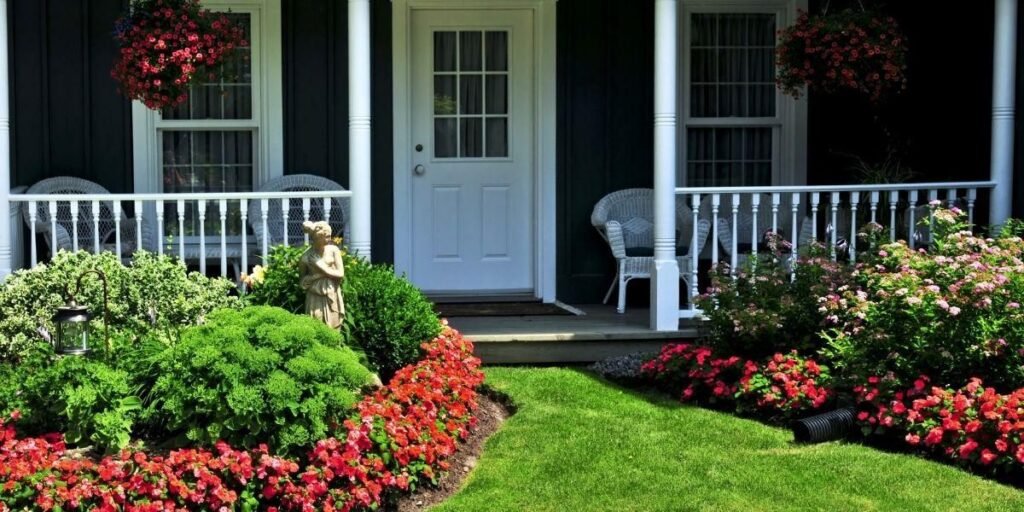
Foundation plantings serve as the vital visual bridge connecting the rigid, vertical walls of your house to the soft, horizontal expanse of your lawn. When amateur landscapers plant a single monotonous row of boxwoods tight against the siding, the result looks flat and dated. Professional designers instead use a tiered, layered approach that creates depth and year-round interest.
- The back layer: Position taller evergreen shrubs or small flowering trees against the back layer of the house to mask blank foundation walls, utility meters, and crawlspace vents. I often recommend using Green Velvet Boxwood or Compact Hinoki Cypress for this structural backdrop.
- The middle layer: Introduce medium deciduous shrubs that offer seasonal variety, such as Endless Summer Hydrangeas or Compact Burkwood Viburnum, providing summer blooms and autumn color shifts.
- The front border: Line the outer edge of the bed with low-growing flowering perennials like Purple Coneflower (Echinacea purpurea), Becky Shasta Daisy, or Coral Bells (Heuchera) to soften the hard line where mulch meets turfgrass.
Pro Design Tip: Avoid placing large shrubs directly beneath windows where they will eventually block your view and natural light. Always check the mature height and spread of a plant on its nursery tag before placing it near your foundation.
2. Replace Part of the Lawn With Curved Landscape Beds
Stiff, ninety-degree turf edges and straight, boxy planting strips can make even a well-maintained front yard feel rigid, sterile, and uninspired. Introducing sweeping, organic curves immediately breaks up the harsh linear geometry of modern home foundations and creates a custom, high-end aesthetic.
Curved beds eliminate awkward mowing traps. Sharp corners and narrow turf strips between the driveway and foundation make mowing frustrating and often lead to scalped grass or damaged siding. Sweeping curves allow lawnmower wheels to glide smoothly along the perimeter.
This approach also expands high-impact planting space. Converting high-maintenance turfgrass into deep mulch and garden beds instantly reduces your weekly watering and chemical fertilizer footprint across the property. Furthermore, organic curves act as natural arrows for the human eye, guiding visitors smoothly along walkways and drawing attention toward your main front entrance rather than dead spaces.
Before cutting out any sod to expand your beds, lay out a standard garden hose or a coiled rope along the lawn. Walk out to the street and view the shape from different angles to ensure the curves look natural and balanced before you start digging.
3. Create a Stone Walkway Framed by Colorful Planting
Your front walkway is the primary physical journey that guests take from the curb or driveway to your front door. Upgrading from a narrow, cracked, builder-grade concrete slab to a textured natural stone or architectural paver path completely transforms the welcoming feel of your home.
When selecting high-performance materials, look toward irregular Pennsylvania Blueflag flagstone, tumbled concrete pavers, and dry-laid fieldstone, which offer excellent slip resistance in wet weather while developing a rich, weathered patina over time. Avoid creating a sterile stone runway by framing the path with low-growing, resilient ground covers like Creeping Thyme (Thymus serpyllum), Sweet Alyssum, or Stonecrop Sedum. These plants spill over the stone edges, releasing subtle natural fragrances when brushed against by foot traffic.
Make sure your main front walkway is at least 4 feet wide so two people can comfortably walk side-by-side. Narrow paths feel cramped and unwelcoming.
4. Plant a Statement Ornamental Tree as the Front Yard Focal Point
A single well-placed specimen tree anchors an entire front yard layout, providing vertical height, seasonal interest, and a natural point of balance for your home’s architecture. Instead of planting a random collection of small shrubs, investing in one exceptional tree creates an instant focal point that catches the eye from the street.
- Japanese Maples (Acer palmatum): Unbeatable for small to medium yards, offering delicate leaf textures, umbrella-like branching habits, and brilliant crimson autumn foliage.
- Flowering Dogwoods (Cornus florida) and Eastern Redbuds (Cercis canadensis): Perfect for medium yards, producing stunning clouds of pink or white spring blossoms before leafing out for the summer.
- Southern Magnolias and Crape Myrtles (Lagerstroemia): Serve as excellent choices for warmer climates, delivering long summer flowering periods, attractive multi-stem forms, and striking exfoliating bark characteristics in winter.
5. Add a Rock Garden With Drought-Tolerant Plants
Rock gardens reduce irrigation demands while introducing rugged textural contrast to traditional green lawns. They perform exceptionally well in poor soil conditions, full-sun exposures, and difficult sloped areas where turf struggles to survive.
A well-executed rock garden incorporates stacked boulders, gravel mulch layers, and mineral earth tones that mimic natural desert or alpine ecosystems. It features low-water succulent species like Sedum ‘Autumn Joy’, Blue Spruce Stonecrop, and ornamental alpine plants that thrive with minimal rainfall once established.
When building a rock garden, bury the bottom third of your larger boulders directly into the soil. Boulders that simply sit on top of the ground look fake and unnatural, whereas partially buried rocks look like they have occupied the landscape for centuries.
6. Build Terraced Planting Beds on a Sloped Front Yard
Sloping front yards present severe erosion risks and make routine lawn mowing dangerous and inefficient. Building terraced garden beds transforms an unusable incline into a series of flat, highly manageable planting levels that retain topsoil and capture rainwater.
This approach utilizes interlocking retaining wall blocks, stacked natural stone, or treated landscape timbers to step down the grade securely. Terracing breaks rapid water runoff down the slope, allowing moisture to soak deeply into plant root zones rather than washing away valuable topsoil and mulch.
7. Mix Evergreen Shrubs With Seasonal Flowers for Year-Round Color
A landscape that looks vibrant and lush in July often appears stark, brown, and lifeless in January. Blending evergreen structural plants with seasonal flowering annuals guarantees visual interest across all twelve months of the year.
Dwarf Alberta Spruce, Wintercreeper Euonymus, and Inkberry Hollies maintain deep green architecture through freezing winter weather, preventing your front yard from looking abandoned during the off-season. Tulips and Daffodils in spring, Petunias and New Guinea Impatiens in summer, and Chrysanthemums and Ornamental Kale in autumn keep the color palette dynamic and fresh.
8. Edge Landscape Beds With Natural Stone or Decorative Brick
A clean physical edge separates turfgrass from mulch beds, preventing aggressive grass roots from invading your garden and giving the entire property a sharp, manicured appearance that signals professional care.
Natural stone blocks provide rustic weight and an organic, weathered finish that pairs beautifully with traditional and cottage-style homes. Alternatively, flush brick pavers allow lawnmower wheels to roll directly along the edge, eliminating the need for tedious manual string trimming around garden beds.
9. Create a Low-Maintenance Landscape Using Mulch and Native Plants
Lowering your yard care workload starts with selecting regionally adapted native plants and applying thick layers of organic wood mulch across all exposed bed surfaces.
Native species like Black-Eyed Susan (Rudbeckia hirta), Butterfly Weed (Asclepias tuberosa), and Switchgrass naturally resist local insect pests, tolerate regional weather extremes, and support beneficial pollinators like bees, butterflies, and hummingbirds. Applying a 2-to-3-inch layer of shredded hardwood mulch retains critical soil moisture, suppresses invasive weed germination, and moderates soil temperatures around sensitive root systems.
10. Add Landscape Lighting Along Walkways and Garden Beds
Curb appeal does not magically disappear the moment the sun drops below the horizon. Thoughtfully designed landscape lighting enhances nighttime security while dramatically showcasing your property’s best architectural angles and botanical features after dark.
Instead of relying on harsh, uniform floodlights that turn your front yard into a commercial parking lot, opt for a layered low-voltage LED system. Space subtle path lights along walkways to guide foot traffic safely, alternating them from side to side rather than creating an artificial airport runway effect. Position uplights at the base of statement trees or architectural columns to cast long shadows and highlight vertical height, while gentle wash lights directed against low shrubs or stone retaining walls create a warm, welcoming glow across your home’s facade.
11. Frame the Driveway With Trees, Shrubs, and Flower Borders
A large paved driveway often dominates the front yard, introducing an expansive sea of gray asphalt or concrete that can easily feel harsh, hot, and uninviting. Softening these hard, unforgiving edges is one of the quickest ways to integrate the driveway seamlessly into your overall landscape design.
Plant a narrow, durable perennial border or small flowering ornamental trees like Columnar Hornbeam or Pyramidal English Oak along the outer edge of the pavement to break up its visual weight. When selecting plant materials for this high-stress zone, always choose upright or columnar varieties that will not spread outward, crowd parked vehicles, or scratch car doors as guests maneuver their cars. Incorporating hardy, traffic-tolerant ground covers or low-growing ornamental grasses like Blue Fescue directly against the concrete edge also prevents weed infiltration and creates a clean, intentional property boundary.
12. Plant Decorative Ornamental Grasses for Texture and Movement
Ornamental grasses introduce a completely distinct architectural element to a front yard layout, contrasting sharply against rigid building materials and traditional broadleaf shrubs.
Incorporate versatile varieties like Shenandoah Switchgrass, Hameln Fountain Grass, or Karl Foerster Feather Reed Grass to add delicate vertical lines and gentle, mesmerizing movement whenever a passing breeze sweeps through your yard. These resilient plants require minimal irrigation once their root systems are established and provide striking golden or bronze vertical interest throughout the bleak winter months long after traditional perennials have died back to the soil line.
Positioning these grasses near entryways or along property lines creates natural privacy screens that sway gracefully without feeling heavy or oppressive.
13. Use Large Decorative Planters to Highlight the Front Entrance
If you are looking for an immediate visual upgrade that requires zero digging, grading, or sod removal, large decorative planters offer instant impact right at your front door.
Group your containers in uneven numbers, such as dynamic clusters of three, varying their heights, colors, and textures to create a professional composition. Build your floral arrangements using the traditional thriller, filler, and spiller design formula: a tall, dramatic vertical element like a Dwarf Alberta Spruce or Dracaena Spike in the absolute center, mounding colorful plants like Geraniums around the middle ring, and cascading vines like Sweet Potato Vine (Ipomoea batatas) spilling gracefully over the rim of the pot.
Containers give you the ultimate flexibility to rotate seasonal color palettes effortlessly, swapping spring bulbs for summer petunias and autumn chrysanthemums without altering your permanent structural beds.
14. Create a Dry Creek Bed With River Rocks for Drainage and Visual Interest
Water management is a frequent headache in residential front yards, particularly where heavy roof runoff or sloping terrain causes destructive soil erosion. A dry creek bed engineered with smooth river rocks solves drainage problems while acting as a stunning naturalistic landscape feature.
Excavate a shallow, winding trench along the natural path of stormwater runoff, line it with heavy-duty geotextile fabric to block weed growth, and fill it with a graded mix of smooth river stones and larger accent boulders. This hardscape feature channels heavy rain safely away from your foundation while mimicking a natural mountain stream bed.
Planting moisture-loving ornamental grasses and ferns along the outer banks softens the stone edges and integrates the drainage solution seamlessly into your garden design.
15. Add a Small Seating Garden Near the Front Porch
Front yards are frequently treated as purely decorative spaces meant only to be looked at from a distance, but adding a small, intimate seating area transforms the front of your home into a welcoming, social extension of your living space.
Positioning a classic wooden bench, a pair of comfortable Adirondack chairs, or a small bistro set near the front porch creates an inviting spot to enjoy your morning coffee or chat casually with neighbors. Frame this seating nook with fragrant flowering shrubs like English Lavender, Daphne, or Sweet Olive (Osmanthus fragrans), and set the furniture on a stable pad of flagstone, pavers, or pea gravel rather than directly on the lawn where chair legs sink into damp turf.
This thoughtful layout encourages neighborhood connection and makes your entire property feel approachable and lived-in.
16. Build Layered Privacy Planting With Trees and Shrubs
If your home sits uncomfortably close to a busy street or a neighbor’s driveway, achieving privacy becomes a top priority, but standard tall wooden fences often look harsh and unwelcoming in a front yard setting.
A living privacy screen built from layered evergreen trees and multi-stemmed shrubs provides effective screening while softening the street view with natural beauty. Combine columnar evergreens like Emerald Green Arborvitae or Taylor Juniper with flowering understory trees like Serviceberry (Amelanchier) to create a dense, multi-tiered visual barrier.
Staggering your planting in a natural zigzag pattern rather than a straight, rigid line prevents the screen from looking like an unyielding green wall and creates a much more organic aesthetic.
17. Finish the Landscape With Decorative Boulders and Natural Stone Accents
The final touch of professional landscaping often relies on unliving natural elements that anchor the design and provide permanent structural weight.
Strategically placing decorative boulders and weathered stone groupings throughout your planting beds introduces ancient texture and a sense of timeless permanence. Always group boulders in odd numbers of three or five, varying their individual sizes and burying their lower bases securely into the soil so they appear naturally settled into the earth rather than dropped in place.
These stone accents tie your hardscaping, foundation beds, and lawn edges together into a cohesive, expertly finished composition.
Frequently Asked Questions
What type of front yard landscaping adds the most curb appeal?
A balanced combination of layered foundation plantings, curved mulch beds, a defined natural stone walkway, and a healthy, well-maintained lawn consistently delivers the highest return on curb appeal.
How can I landscape a small front yard without making it feel crowded?
Focus on vertical elements like columnar trees and ornamental grasses, use large statement planters near the entry, and avoid cluttering the space with too many competing plant varieties.
What is the best way to landscape a sloped front yard?
Building terraced retaining walls or planting dense, deep-rooting ground covers and ornamental grasses are the most effective ways to stabilize soil and eliminate erosion on slopes.
Which front yard plants require the least maintenance?
Regionally adapted native perennials, drought-tolerant ornamental grasses, and hardy evergreen shrubs require minimal watering, pruning, and fertilization once established.
How much lawn should I keep in a front yard?
Keep only the amount of lawn that serves a functional purpose, such as an open play area or a clean visual frame, while converting high-maintenance sloping or corner turf into deep garden beds.
Can front yard landscaping increase home value?
Yes. Professional, well-maintained front yard landscaping significantly boosts curb appeal and can increase a property’s overall market resale value by 5% to 12%.
How often should mulch and edging be refreshed?
Apply a fresh 1-to-2-inch layer of shredded hardwood mulch once a year in spring to retain moisture and suppress weeds, while re-cutting bed edges biannually to maintain a crisp look.
Should I hire a landscape designer or plan it myself?
If your property features complex drainage issues, severe slopes, or large-scale structural hardscaping, hiring a professional landscape designer prevents costly installation mistakes.