
If you have spent any time around a windowsill collection of pothos, monstera, or African violets, you have probably met them: small, dark, wobbly-flying insects that lift off the soil every time you water. Most growers write them off as a minor nuisance. They are not. They are a signal. In over fifteen years of managing indoor plant collections and consulting on greenhouse pest issues, I have seen fungus gnats go from a mild annoyance to a root system in total crisis in under a month when growers focus only on what they can see flying around.
Fungus gnats (Sciaridae family, most commonly Bradysia species in home collections) are drawn to one thing above all else, which is consistently wet organic matter. Adults are essentially harmless. They do not bite, and they do not damage foliage, though they certainly like to hover around your face when you water. The real damage happens below the soil line. That is where their larvae feed on fungal threads, decaying organic matter, and, once populations surge, the fine root hairs that keep your plants hydrated and fed. A light infestation is mostly cosmetic. A heavy one, left unchecked for six to eight weeks, can severely set back plant growth and open the door to secondary root rot.
The good news is that this is one of the more solvable pest problems in indoor gardening, provided you treat it as a soil biology issue rather than a spray-and-hope situation. Below is the exact approach I use with my own collection and recommend to clients, built around interrupting the insect’s full life cycle instead of just swatting at what is airborne.
Identifying Fungus Gnats Before You Treat
Misdiagnosis wastes more time than almost anything else in pest management. Treatments built for fungus gnats do virtually nothing against fruit flies or drain flies, and vice versa. Getting the identification right comes first.
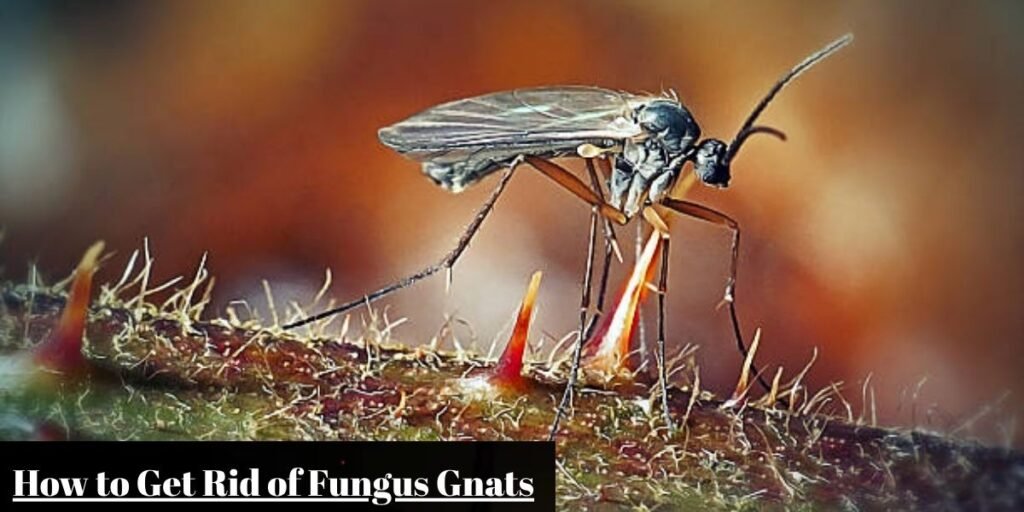
Adult fungus gnats run about 1/16 to 1/8 inch long, featuring slender, dark gray to black bodies, long thread-like legs, and antennae that look almost too long for their body. Their flight pattern is the clearest giveaway. They do not zip around the way fruit flies do. Instead, they hover weakly, drift, and land clumsily, often just walking across the soil surface rather than taking off again. Hold one still, or catch it on a sticky trap, and look at the wings under a hand lens or phone macro lens. You will notice a faint Y-shaped vein pattern that is diagnostic for the Sciaridae family.
Location tells you almost as much as physical appearance. Fungus gnats cluster around the top inch or two of houseplant soil, on saucers holding standing water, and around anything freshly watered. Terrariums, propagation trays, and recently repotted tropicals are magnets for them because that is where moisture lingers the longest.
Growers confuse them constantly with two other household flies, so here is the practical distinction I give clients.
Fruit flies have a rounded, tan to reddish body with noticeably red eyes, and they gather around ripening produce, compost bins, and kitchen drains rather than potting soil. Drain flies, also called moth flies, look almost furry with broad, heart-shaped wings held tent-like over the body, breeding in the organic film lining sink and shower drains. Fungus gnats, by contrast, are soil obligate. If you are not seeing them near dirt, they are probably not fungus gnats at all.
To confirm an active infestation rather than a few stray adults, disturb the top layer of soil with a chopstick or your finger. A cloud of weak fliers lifting off is a strong indicator. Next, look closely at the soil surface itself. Fungus gnat larvae are translucent to whitish, legless, and topped with a distinctly shiny black head capsule, growing up to about a quarter inch long before pupating. On a heavily infested pot, you will sometimes spot a faint slime trail across the surface where larvae have traveled. That is a clear sign the population is well past a minor nuisance. Plants under sustained larval pressure often show stunted new growth, yellowing on lower leaves, and leaf drop that looks identical to underwatering even when the soil is damp.
What Is Bringing Fungus Gnats Into Your Houseplants?
Fungus gnats are not opportunistic in the same way fruit flies are. They require specific environmental conditions to establish, and every infestation I have diagnosed traces back to one or more of these core causes.
Chronically wet soil is the single biggest driver. Female gnats actively seek out saturated substrate to lay eggs, because that dampness supports the micro-fungi, algae, and bacterial film their larvae feed on. If your watering habit keeps the top two inches of soil damp more often than dry, you are effectively running an unintentional breeding operation.
Soil composition matters far more than most growers realize. Potting mixes heavy in peat moss, pine bark fines, or uncomposted leaf mold break down rapidly in the warm, humid conditions of a home. That decomposition releases volatile organic compounds that female gnats use to locate ideal egg-laying sites. It functions as an open invitation.
Poor drainage compounds the problem significantly. Pots lacking drainage holes trap standing water at the base, creating an anaerobic zone that stays wet indefinitely. Compacted soil causes the same issue even inside a well-draining container, blocking essential airflow and extending how long the soil profile stays saturated. Indoor humidity above roughly 50 percent slows surface evaporation even further, which is why enclosed plant cabinets, grow tents, and tightly packed shelves tend to carry chronic gnat pressure even when watering routines seem reasonable.
In many cases, infestations are simply purchased. Bagged commercial potting soil stored outdoors at a garden center can pick up moisture through pinhole punctures in the packaging, turning into a breeding ground before it ever hits your shopping cart. New plants brought home from a nursery or greenhouse present the exact same risk. Commercial growers run high humidity and constant moisture to maximize growth, creating the ideal environment for gnats to thrive. If you have ever brought home a clean plant and noticed gnats within two weeks, this is almost certainly the reason.
Why They Keep Coming Back Even After You Kill Flying Adults
This is the mistake I see most often in the field. Someone wipes out the visible adults with a contact spray or a few sticky traps, assumes the problem is solved, and feels baffled two weeks later when gnats return in full force. Killing adults without addressing the soil is treating a surface symptom rather than the underlying cause.
The Sciaridae life cycle transitions through four distinct stages: egg, larva, pupa, and adult. A single female can lay up to 300 eggs in her short lifespan, deposited directly into the top layer of moist soil where sprays and sticky traps cannot reach them. Those eggs hatch in roughly four to six days.
The larval stage is where the vast majority of the population resides. Roughly 80 percent of the insect’s total life cycle is spent as a larva across a two- to three-week window. Early on, larvae feed on fungal threads and decaying organic matter in the soil. Once population density climbs, however, they begin feeding on fine root hairs, turning a cosmetic annoyance into a genuine threat to plant health.
Adults, by contrast, live for only seven to ten days, and their entire biological objective during that window is to mate and lay the next generation of eggs. If you eliminate every adult flying around your living room today, you have done nothing to the dozens or hundreds of larvae developing beneath the soil line. They will simply emerge as adults over the following two weeks and restart the cycle. This is why surface-level control consistently fails. You must interrupt reproduction at the soil level, not just intercept fliers in the air.
Getting Rid of Fungus Gnats
An effective elimination plan operates on two simultaneous fronts. You need to dry out and treat the soil where the population actually lives, while also trapping adults to limit new egg-laying while the soil treatment takes hold.
Let the Soil Dry Enough to Interrupt Their Breeding Cycle
This is the most cost-effective and lowest-risk tool in your arsenal, yet it is frequently underestimated. Fungus gnat eggs and first-instar larvae are extremely sensitive to desiccation and require a continuously moist environment to survive. Allowing the top two to three inches of your potting mix to dry out fully between waterings physically destroys eggs and starves young larvae without requiring a single chemical product.
Check soil moisture with a wooden skewer or a dedicated moisture meter rather than guessing. Let the surface dry down while ensuring the root zone below does not dry out to the point of plant stress. Succulents, cacti, snake plants (Dracaena trifasciata), ZZ plants (Zamioculcas zamiifolia), and ponytail palms handle extended dry periods without issue and are straightforward to manage during an active infestation. Thinner-leaved tropicals, including calatheas, prayer plants, maidenhair ferns, fittonia, and peace lilies, require closer monitoring because they will wilt noticeably before permanent damage sets in, offering a clear visual cue to watch for.
One specific habit trips growers up constantly. Yellowing foliage caused by larvae feeding on root tissues looks almost identical to underwatering, prompting people to water more frequently. That is the worst possible reaction in this scenario. Adding moisture expands the larval food supply and accelerates the exact root damage causing the yellowing in the first place.
Catch the Adults Before They Lay Another Generation of Eggs
Yellow sticky traps are highly effective because adult fungus gnats are strongly attracted to that specific yellow color spectrum. Once they land on the adhesive, they are trapped permanently. While this will not affect larvae underground, it significantly reduces the number of new eggs deposited while your soil treatments do the heavy lifting.
Cut standard sticky cards into smaller sections and mount them on thin stakes or bamboo skewers so they sit low, right at the soil line. Adult gnats are weak fliers that stay close to the soil surface, meaning a trap placed too high will catch very little. Positioning an additional strip flush against the inside rim of the pot catches adults as they crawl out of the soil before they even take flight. You will typically notice caught gnats within hours of placement and see a marked drop in flying adults within three to five days. Keep in mind that traps alone will not eradicate an infestation. Treat them as a monitoring and suppression tool rather than a standalone cure.
Treat the Soil Where the Real Problem Begins
This is where an infestation is actually resolved, because this is where the larvae live and feed.
Bacillus thuringiensis israelensis (BTI) is the gold standard soil treatment and the primary option I recommend in almost every situation. BTI is a naturally occurring soil bacterium that produces crystalline proteins toxic specifically to the larvae of dipteran insects, such as fungus gnats, mosquitoes, and black flies. It remains completely harmless to humans, pets, plant roots, and beneficial soil organisms like earthworms. When a larva ingests the bacteria, the proteins disrupt its digestive tract, causing it to stop feeding within hours.
Mix commercial BTI granules or liquid concentrate into water according to the label instructions, allowing it to steep if required by the product, and drench the potting mix thoroughly. Expect larvae to stop feeding within one to three days, a measurable drop in surface population by day four to seven, and a clear reduction in adult emergence by day ten to fourteen. Because BTI targets feeding larvae rather than eggs, reapply the treatment with every watering for three consecutive weeks. That window ensures you eliminate each new generation that hatches without leaving a gap for the population to rebuild.
A diluted hydrogen peroxide drench serves as a rapid contact option for moderate to heavy infestations where you need to knock down larval numbers immediately. Mix one part standard 3% hydrogen peroxide with four parts cool water. Never use a higher concentration, as it can burn roots and damage beneficial soil microbes. Allow the top layer of soil to dry out first, then pour the solution evenly until it drains from the bottom of the container. The mixture will fizz on contact, which is the oxidation process destroying soft-bodied larvae and eggs while simultaneously aerating compacted soil. Use this as an initial strike on heavily infested pots, then follow up with BTI over subsequent weeks to clear any survivors or newly hatched larvae.
Beneficial nematodes, specifically Steinernema feltiae, are an exceptional investment for larger plant collections, indoor greenhouses, or persistent infestations that resist standard drying and drenches. These microscopic roundworms actively hunt gnat larvae through the thin moisture film between soil particles, tracking carbon dioxide and chemical excretions. Once they locate a larva, they enter its body and release a symbiotic bacterium that kills the host within 24 to 48 hours. The nematodes then reproduce inside the organism and disperse to hunt new targets. They perform best in soil temperatures between 60 and 80°F and are sensitive to ultraviolet light, so apply them during the evening or under indirect light while keeping the soil consistently moist for the first week. This is the one scenario where maintaining soil moisture is beneficial, as nematodes require it to move and survive.
When It Is Time to Replace the Potting Soil
In certain cases, the potting medium is too degraded or contaminated to salvage, making complete repotting far more efficient than running repeated treatment cycles.
Clear signs that it is time to start fresh include a sour, rotting odor coming from the pot, which indicates anaerobic decomposition; soil that refuses to dry out after two weeks despite proper conditions; a visibly dense larval population across the surface; or roots that have turned soft, dark, and mushy rather than remaining firm and white or light tan.
Perform this task outdoors or over a drop cloth to prevent scattering larvae through your living space. Gently ease the plant out of its container and loosen the old soil from the root ball using your fingers or a soft brush on tight sections. Rinse the bare roots under lukewarm running water to wash away remaining eggs, larvae, and decayed root tissue. Bag the discarded soil immediately and throw it away outdoors. Never attempt to reuse infected soil, even after treating it.
When selecting a fresh potting mix, choose a commercial blend with a high proportion of perlite, pumice, or coarse sand to guarantee rapid drainage. Favor lower-peat formulas or mix in coco coir, which holds moisture more evenly and resists rapid decomposition compared to peat moss. Store any remaining potting soil in a sealed, airtight container. Leaving an open bag in a garage or shed creates the exact damp environment that attracts gnats before you ever fill a pot.
Gardening Habits That Prevent Future Infestations
Long-term protection relies on permanently modifying the environmental conditions that attract gnats, rather than relying on endless treatment cycles.
Abandon calendar-based watering schedules entirely. Test the soil moisture with a wooden skewer or meter before every single watering, and only apply water when the top third of the pot has truly dried out. Bottom watering is an exceptional preventative strategy for gnat-prone species. Place the pot in a shallow tray of water for 20 to 30 minutes, allowing the root zone to pull moisture upward through the drainage holes, then discard any remaining water. This thoroughly hydrates the roots while leaving the top layer of soil dry, preventing adult gnats from finding the moisture they need to lay eggs.
Improve soil aeration by mixing extra perlite, pumice, or coarse orchid bark into standard commercial mixes, and ensure every container features at least one open, functional drainage hole. Using small pot feet or risers keeps the base elevated above standing runoff in saucers. Always empty drainage trays within 15 minutes of watering, as standing water wicks back up into the soil profile and undoes your drying efforts. When organizing your plants, group specimens with similar moisture requirements together rather than mixing succulents alongside moisture-loving tropicals. Scale back watering frequency significantly during autumn and winter when plant growth slows, and evaporation rates drop.
Placing a small oscillating fan near dense plant displays provides surprising benefits. The continuous airflow dries the soil surface more evenly and creates turbulent air that prevents weak-flying adults from landing and ovipositing. Clean up fallen leaves, faded blooms, and organic debris from the soil surface promptly, as decaying matter provides an additional food source for larvae. Avoid using uncomposted kitchen waste, coffee grounds, or tea leaves as soil amendments or top-dressings. These materials decompose rapidly indoors, creating the exact fungal blooms that draw gnats into your home.
Quarantine every new plant for a minimum of two weeks before integrating it into your main collection. Insert a yellow sticky trap into the new plant’s pot during this observation window to detect and intercept hidden pest issues early. Finally, keep all open bags of potting mix stored inside airtight plastic containers rather than leaving open bags exposed in damp storage areas.
Home Remedies Worth Trying and Those That Usually Disappoint
There is a vast amount of well-intentioned but counterproductive advice regarding fungus gnat control. It is essential to separate methods backed by pest management principles from those that simply sound plausible. Highly effective solutions include BTI drenches, diluted 3% hydrogen peroxide treatments, beneficial nematode applications, low-placed yellow sticky traps, and physical soil barriers made from coarse sand or gravel. Conversely, ineffective or risky methods include apple cider vinegar traps, coffee ground top-dressings, undiluted essential oils, heavy cinnamon applications, and relying solely on extreme soil drying.
Applying a half-inch layer of coarse horticultural sand, fine gravel, or crushed pumice over the soil surface establishes an effective physical barrier. This top layer prevents adult gnats from reaching the damp substrate beneath to lay eggs and blocks emerging adults from reaching the surface. Avoid using fine play sand for this application, as it packs down, traps moisture, and restricts air exchange, worsening soil conditions.
Cinnamon possesses mild antifungal properties, but its effectiveness against gnats is minimal. It does not deter actively feeding larvae or egg-laying adults, and heavy applications form a crust over the soil that hinders water penetration. Apple cider vinegar traps are designed specifically for fruit flies and do not work for fungus gnats. Gnats respond to the scent of damp soil and soil fungi rather than fermenting fruit, causing them to ignore vinegar traps entirely. Coffee grounds add wet, uncomposted organic material to the soil, which accelerates mold growth and provides more food for larvae. Diluted essential oil sprays, such as neem, peppermint, or cinnamon oil, fail to penetrate the soil where larvae live, while concentrated oil applications risk burning delicate foliage and clogging plant stomata.
How Long Does It Usually Take to Eliminate Fungus Gnats?
Eradication timelines depend directly on the severity of the infestation when control measures begin, but a standard four-week recovery model provides a reliable benchmark. Week one focuses on trapping active flying adults and applying your initial soil drench. Week two generally brings a sharp decline in larval activity beneath the soil and fewer emerging adults. Week three addresses any late-hatching larvae with a second biological treatment application. By week four, sticky traps should remain completely clear, and soil inspections should reveal zero larval activity.
A minor infestation caught early can resolve in as little as seven to ten days through targeted sticky trap placement and strict surface drying. A moderate, multi-plant infestation typically requires two to three weeks, combining biological treatments like BTI alongside continuous adult trapping. Severe infestations involving high larval density across multiple containers can take three to five weeks of consistent intervention, requiring soil drenches, adult suppression, structured dry-down periods, and occasional repotting for plants with root damage.
The primary reason growers fail to eliminate gnats is stopping treatment prematurely. Discontinuing efforts as soon as visible adults disappear allows surviving subterranean larvae to mature, emerge, and restart the cycle within days. Maintain your chosen treatment regimen for a minimum of three consecutive weeks to guarantee every overlapping life stage is eliminated.
Frequently Asked Questions
Can fungus gnats kill indoor plants?
It is rare in mature, established specimens. The real threat is to seedlings, fresh cuttings, and young tropicals, where high larval numbers can strip away critical fine root tissue, causing severe decline and exposing the plant to secondary pathogens like Pythium root rot.
Do fungus gnats bite people or pets?
No. Fungus gnats lack biting mouthparts and feed exclusively on soil fungi, decaying organic matter, and fine root structures. They represent a nuisance to growers rather than a biological health hazard.
Can one infested plant spread fungus gnats to others?
Yes, very easily. Adult gnats fly between adjacent containers seeking damp organic substrate to deposit eggs. Isolate any plant displaying signs of infestation immediately to protect the rest of your collection.
Should I throw away potting soil with fungus gnats?
Not necessarily. Light to moderate infestations respond well to BTI or diluted hydrogen peroxide drenches without needing complete soil replacement. Reserve full soil disposal for situations where the medium smells sour, stays waterlogged, or harbors extreme larval density.
Can fungus gnats survive outdoors?
Yes. They are a natural component of outdoor soil ecosystems, thriving in damp shade, leaf litter, and compost heaps. Outdoors, native predators keep population numbers balanced. Indoors, the absence of natural predators allows populations to increase rapidly.
Keeping Fungus Gnats From Returning
Maintaining long-term protection after clearing an infestation comes down to three core habits practiced consistently.
First, strictly regulate soil moisture by testing depth before watering rather than following a fixed schedule, utilizing bottom watering where appropriate, and never allowing runoff to sit in drainage saucers.
Second, foster strong root environments by using loose, well-aerated potting media rich in perlite or pumice, avoiding dense, peat-heavy soils that retain moisture excessively.
Third, direct treatments at the larval stage beneath the soil whenever pests appear, rather than relying on sprays or traps aimed solely at flying adults. The soil profile is where the population breeds, and it is where lasting control is achieved.
Mastering these three fundamentals ensures fungus gnats remain a rare and easily managed occurrence rather than a recurring frustration, keeping your indoor collection healthy and thriving.