

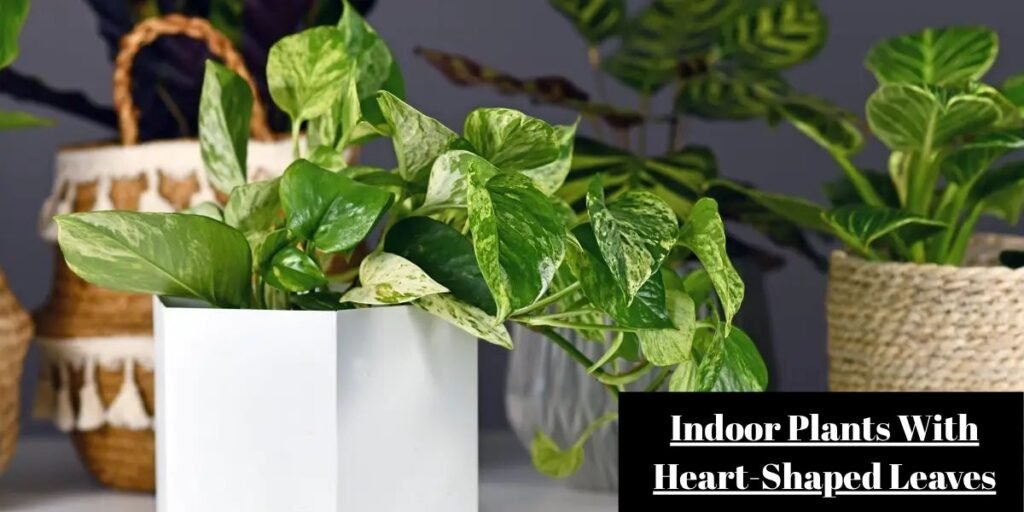
A green plant with heart shaped leaves adds immediate architectural charm and warmth to indoor spaces. Bring one into a room, and the soft curves naturally soften hard furniture lines and angled walls. Botanists refer to this distinct shape as cordate, a form evolved by nature to help plants capture overhead ambient light efficiently while channeling excess humidity down to their roots.
Identifying these plants correctly requires looking beyond leaf silhouette alone. Leaf thickness, stem attachment points, texture, and growth habits vary widely across species. Matching these physical traits with proper environmental conditions ensures your plant thrives for years rather than struggling after a few weeks.
What Makes a Plant’s Leaves Heart-Shaped?
In botanical terms, a cordate leaf is one that is notched at the base, curves outward into two rounded lobes, and narrows to a defined point at the tip, essentially a mirror image split down the midrib. This is not simply decorative. In the dense, competitive understory of a tropical rainforest, a broad, notched leaf increases the surface area available for photosynthesis without adding much extra weight or material cost to the plant, which matters when sunlight only arrives as scattered flecks through a thick canopy overhead.
The shape also does double duty as a built-in drainage system. Water that lands on a cordate leaf runs along the curved lobes and channels itself toward the drawn-out tip, where it drips off cleanly rather than sitting in the center of the leaf. That single adaptation is why so many heart-leafed species tolerate humid conditions without developing fungal leaf spot, provided the surrounding air still moves and the leaf is not deliberately misted right before nightfall.
Nearly every plant on this list traces its origin back to humid, canopy-shaded regions of Central America, South America, Southeast Asia, or coastal Africa. Recognizing that shared ancestry is the fastest way to set up a reasonable care routine even before you have identified the exact species sitting on your windowsill.
10 Indoor Plants With Heart-Shaped Leaves
Heartleaf Philodendron
Philodendron hederaceum is the plant most people picture when they hear “heart-shaped houseplant.” According to the North Carolina State Extension Gardener Plant Toolbox, this evergreen tropical vine belongs to the arum family, Araceae, and can trail or climb to as much as 13 feet indoors given the right support. It has gone by several older names on plant tags over the decades, including Philodendron oxycardium and Philodendron scandens, so do not be surprised if you spot one of those labels at a nursery.
The species name itself means “ivy-like,” a nod to how its cascading habit resembles English ivy. NC State Extension notes it “prefers medium light but will tolerate low light” and can survive for long periods in extremely low light, which explains why it thrives in windowless offices and dim hallways where almost nothing else survives. Let the top inch of soil dry before watering again, and back off further once winter arrives and growth naturally slows. Its flexible, fast-rooting vines make it one of the easiest plants to train up a moss pole or let spill down from a high shelf.
One safety note worth bolding: philodendrons contain insoluble calcium oxalate crystals, and the ASPCA lists heartleaf philodendron as toxic to dogs, cats, and horses, with clinical signs including oral irritation, drooling, and difficulty swallowing if chewed. Keep trailing vines out of reach of curious pets.
Sweetheart Hoya
Hoya kerrii takes the heart motif to its most literal extreme, producing thick, rubbery, succulent-like leaves that are near-perfect anatomical hearts. According to Kew’s Plants of the World Online, the species is native to the region stretching from Indo-China to western Malesia, where it grows as a climbing epiphyte or lithophyte in the wet tropical biome, clinging to tree bark and rock faces rather than rooting in soil.
This is a genuinely slow grower even under ideal conditions, often producing just one to three new leaves per growing season, so patience is part of the deal. Give it bright, filtered light and let the potting mix dry out completely between waterings, since its leaves already store the moisture reserves it needs to coast through dry spells.
Here is the detail almost every impulse buyer misses around Valentine’s Day: a single leaf sold in a small pot is often a leaf cutting with no stem node attached, and a leaf without a node cannot physically produce new growth. It will stay a lone, healthy-looking heart indefinitely, which is charming in its own right but is not “a plant that will grow.” If you actually want a trailing vine, look for a cutting or established plant with a visible node above the soil line. On the pet front, the ASPCA does not list Hoya as toxic, making it one of the rare heart-leafed options that is genuinely safe around chewing cats and dogs.
String of Hearts
Ceropegia woodii produces some of the smallest and most delicate heart-shaped foliage on this list, strung like beads along thin, wiry stems that can trail several feet from a hanging basket. Each leaf carries a marbled silver-green pattern on top with a deep purple underside, a pigmentation pattern typical of plants that evolved in bright, rocky, semi-arid pockets of southern Africa rather than deep rainforest shade.
Because Ceropegia stores water both in its leaves and in small underground tubers, it behaves more like a succulent than a tropical vine. Give it bright, indirect light to keep the silver variegation crisp and the internodal spacing tight, and let the soil dry out thoroughly before watering again. Overwatering is, by a wide margin, the fastest way to lose this plant, since its tuberous roots rot quickly in consistently damp mix.
Heartleaf Philodendron vs. Pothos
These two vining plants get confused constantly, and the mix-up matters because their care needs, while similar, are not identical. The Clemson Cooperative Extension Home & Garden Information Center points to a reliable, low-tech identification trick: look at the petiole, the small stalk that connects the leaf to the main stem. Philodendron petioles are smooth and rounded, and the plant produces a papery sheath called a stipule at each new growth point that eventually withers and drops away. Pothos petioles, by contrast, have a visible groove running down the top, and the plant lacks that falling stipule structure entirely.
Leaf feel is the second giveaway. Philodendron leaves taper into a longer, more dramatic point and feel noticeably thinner and softer to the touch. Pothos leaves are thicker, waxier, and often slightly asymmetrical at the base. If you are ever standing in a nursery aisle trying to decide which one you are looking at, running a finger down the petiole will settle the question faster than comparing leaf outlines.
Golden Pothos
Epipremnum aureum has earned its reputation as the houseplant nearly impossible to kill by accident. It is native to the Solomon Islands in the South Pacific, and its heart-shaped leaves are typically splashed with creamy yellow or white variegation that intensifies under brighter indirect light and fades in deep shade. Golden pothos tolerates dim corners far better than most plants, but the trade-off is a leggier, less variegated vine over time.
Golden pothos also carries genuine scientific pedigree. It was one of the species tested in NASA’s 1989 Clean Air Study, and it consistently ranks among the strongest performers for removing airborne pollutants such as formaldehyde, benzene, and xylene from sealed test chambers. It is worth noting that indoor air quality researchers, including follow-up work out of Drexel University, have since cautioned that you would realistically need dozens of plants per room to match what a good ventilation system does on its own. Even so, one or two healthy vines are a genuinely pleasant, low-effort addition to a living room or office. Water once the top two inches of soil feel fully dry, and expect vines to stretch several feet given a bright enough spot.
Anthurium
Anthurium andraeanum pairs dramatic, leathery, dark green cordate foliage with long-lasting, waxy flower spathes in red, pink, or white that can each remain attractive for weeks at a time. It is one of the few plants on this list grown as much for its bloom as its leaf shape, and it demands consistently high humidity and bright, indirect light to keep producing fresh spathes rather than sulking.
Keep the potting medium evenly moist, ideally in a chunky, well-draining orchid bark mix rather than dense potting soil, since standing water around the roots invites rot quickly. Pet owners need to take this one seriously: the ASPCA lists Anthurium as toxic to dogs, cats, and horses, with insoluble calcium oxalate crystals as the toxic principle. Chewing releases needle-like crystals that irritate the mouth, tongue, and throat, producing drooling, oral pain, and difficulty swallowing. The reaction is unpleasant rather than typically life-threatening, but it is real, and the plant should sit well out of reach of curious pets and small children.
Heart Fern
Hemionitis arifolia looks nothing like the trailing vines dominating this list, offering compact, glossy, leathery little heart-shaped fronds on wiry black stems instead. It is a genuine fern rather than a flowering plant, and that distinction matters for care. Ferns lack the waxy cuticle that helps vines like pothos tolerate dry indoor air, so heart fern needs relative humidity above 60 percent to look its best, which typically means a bathroom, a terrarium, or a spot near a humidifier.
Keep the growing medium consistently moist without letting the base sit in stagnant water, and place it in moderate, indirect light away from heating vents, air conditioning drafts, or drying window glass in winter. It is a slower, fussier plant than most on this list, but the payoff is a texture nothing else here quite replicates.
Cyclamen
Cyclamen persicum stands apart for two reasons: its heart-shaped leaves are patterned with intricate silver marbling, and it blooms in winter, sending up distinctive reflexed flowers when almost everything else indoors has gone dormant. It genuinely prefers cool conditions, thriving between roughly 50 and 65 degrees Fahrenheit, which makes it a natural fit for an unheated sunroom or a cool windowsill rather than a warm living room.
Water from the base, either by bottom-watering in a saucer or carefully around the edge of the pot, since water pooling in the central crown is one of the fastest routes to bulb rot. Once the plant finishes blooming and enters summer dormancy, cut back watering dramatically and let it rest in a cool, shaded spot until fresh foliage signals it is ready to grow again in autumn.
Arrowhead Plant
Syngonium podophyllum is a genuine shape-shifter. Young plants produce compact, classic heart-shaped leaves, but as the vine matures and begins climbing, later leaves develop distinctive three-to-five-lobed arrowhead shapes, which is exactly where the common name comes from. This transformation, called heteroblasty in botanical terms, is one of the more visually dramatic developmental changes among common houseplants.
Give it medium to bright indirect light to hold onto its variegated pink, white, or green patterning, since low light tends to push new growth back toward solid green. Water once the top half of the soil has dried, and once the plant starts sending out climbing stems, a slim trellis or moss pole will encourage larger, more dramatically lobed mature foliage.
Peperomia
Several Peperomia species, including Peperomia caperata and Peperomia rana verde, offer a compact, desk-friendly take on the heart-shaped leaf, with deeply ridged or glossy smooth foliage on plants that rarely exceed 12 inches in height. Their semi-succulent leaves and stems store water efficiently, which is exactly why soggy, slow-draining soil is their biggest enemy rather than underwatering.
Position them in medium to bright indirect light and let the top of the mix dry between waterings. Because they stay so small, peperomias are one of the easiest heart-leafed plants to fit onto a crowded windowsill, a bathroom shelf, or a desk that gets only filtered light through an office window.
Monstera
Monstera deliciosa famously begins life with fully solid, unbroken heart-shaped juvenile leaves that are frequently mistaken for a young philodendron. As the plant matures under sufficiently bright indirect light, later leaves develop the signature splits and interior holes known as fenestrations, the feature responsible for its nickname, the Swiss cheese plant.
The science behind those holes is more interesting than most care guides let on. A 2013 study published in The American Naturalist by evolutionary biologist Christopher Muir, then at Indiana University, modeled leaf-level photosynthesis in the stochastic, patchy light environment of the rainforest understory and proposed what he called the “growth-variance hypothesis”: fenestration reduces the day-to-day variance in how much light a plant’s overall canopy receives, which raises its long-term average fitness even though any single leaf captures somewhat less light on its own. The research, published via PubMed, also helps explain why juvenile Monstera leaves stay solid and unfenestrated until the plant is mature enough to climb toward brighter canopy light.
Practically, that means a Monstera kept in dim light may never develop dramatic holes no matter how old it gets. Provide a sturdy moss pole for the plant to climb, water deeply once the top two inches of soil dry, and recognize that a young, solid-leafed Monstera is not stunted, it simply has not reached the light and maturity threshold that triggers fenestration yet.
How to Identify the Right Plant From Its Leaves
Large, glossy, deep green hearts with soft, thin tips: Heartleaf Philodendron
- Thick, stiff, succulent-feeling leaves with a notch at the top: Sweetheart Hoya
- Tiny, marbled-silver hearts strung along thin pink-purple stems: String of Hearts
- Thick, golden-variegated hearts with a grooved petiole: Golden Pothos
- Leathery, dark green hearts paired with wax-like colored blooms: Anthurium
- Solid juvenile hearts that later split into fenestrations: Monstera
- Compact, deeply rippled heart-shaped foliage on short stems: Peperomia
Common Mistakes With Heart-Shaped Houseplants
Overwatering the succulent-leaved types. Hoya kerrii and String of Hearts both store water in thick leaves or underground tubers, and consistently damp soil is the single fastest way to rot their roots. Let the mix dry out fully before watering either one again.
Exposing thin-leaved species to harsh direct sun. Philodendron and Heart Fern both evolved under a rainforest canopy, and their thinner leaf tissue scorches quickly in direct afternoon sun, showing up as crispy brown patches within a day or two.
Treating every cordate species identically. It is tempting to assume “heart-shaped leaf” means “same care routine,” but a humidity-loving fern and a drought-tolerant Hoya have almost opposite watering needs. Identify the species first, then build the routine around it.
Buying a single-leaf Hoya kerrii without checking for a node. A leaf cutting with no visible stem node will live for years but will never branch or produce new leaves. If your goal is an actual growing vine, confirm a node is present before buying.
Confusing Pothos with Philodendron and applying the wrong watering schedule. Check the petiole, grooved versus smooth, rather than relying on leaf shape alone, since the two plants tolerate drought differently.
Expecting a young Monstera to fenestrate immediately. Splits and holes only appear once the plant matures under bright, indirect light. A solid-leafed juvenile plant simply needs more time and more light, not a different care routine.
Which Heart-Shaped Plant Is Right for You?
Start by being honest about your light, humidity, and how often you actually remember to check on a plant, since matching the species to your real living conditions matters far more than matching it to a photo you liked online.
If you want low-maintenance, forgiving greenery and tend to travel or forget waterings, Golden Pothos or Heartleaf Philodendron will tolerate the inconsistency and still look full within a few months.
If your home has a bright windowsill and you are the type to under-water rather than over-water, Sweetheart Hoya or String of Hearts will reward that habit instead of punishing it, since both store their own moisture reserves.
For a genuinely humid room like a well-lit bathroom, Heart Fern and Anthurium bring a texture and, in the Anthurium’s case, a long-lasting bloom that the trailing vines simply cannot match.
Whichever one you choose, the shape itself is doing real botanical work, not just decorative work, and understanding that is what separates a plant that survives a season from one that thrives on your shelf for a decade.