
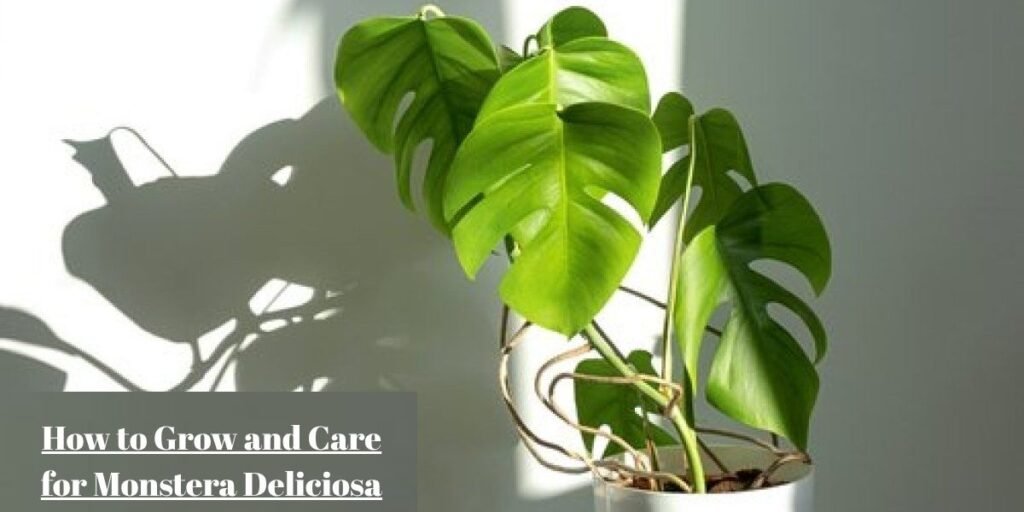
Monstera deliciosa care is one of the most recognizable houseplants in the world, and after growing dozens of specimens over the years, I can tell you it earns that reputation honestly. Native to the tropical rainforests of Southern Mexico and parts of Central America, this evergreen vine is technically a hemiepiphyte, meaning it germinates on the forest floor and then climbs toward the canopy using thick, cord-like aerial roots that latch onto tree bark as it grows. In the wild, a mature plant can climb 60 feet or more up a host tree in search of light.
What most beginners do not realize is that a young Monstera looks nothing like the plant they picture in their head. Seedlings and juvenile specimens produce small, solid, heart-shaped leaves with no holes at all. It is only once the plant matures and starts receiving real energy reserves that it begins punching those dramatic splits and windows into its leaf blades. Botanists call these openings fenestrations, from the Latin word for window, and they are not just decorative. In the rainforest, fenestrations let light filter down to lower leaves and allow wind and rain to pass through the canopy without shredding the plant.
The good news is that growing a thriving, fully fenestrated Monstera indoors is not complicated once you understand what the plant actually wants: bright indirect light, a loose and airy soil structure, a watering rhythm tied to the soil rather than the calendar, consistent warmth, and something sturdy to climb. Get those five variables right, and the plant does the rest.
Monstera Deliciosa Care
| Care Element | Target Goal |
| Light | Bright, indirect light for 8–10 hours daily; protect from harsh direct sun |
| Watering | Water thoroughly when top 2–3 inches of soil feel dry; drain fully |
| Soil Mix | Airy, chunky mix combining potting soil, orchid bark, perlite, and charcoal |
| Humidity | Prefers 50% humidity or higher; tolerates average indoor levels |
| Temperature | Keep between 65°F and 85°F; shield from drafts below 50°F |
| Fertilizer | Balanced liquid fertilizer diluted to half-strength monthly in spring/summer |
| Support | Moss pole, coir pole, or wooden trellis attached to main rear stem |
| Repotting | Move up 2–3 inches in pot size every 1–2 years during spring |
Find the Right Spot for Your Monstera
If I had to name the single factor that makes or breaks a Monstera, it is placement. Where you put this plant affects everything downstream, from how quickly the soil dries between waterings to how fast new fenestrated leaves appear.
In its native habitat, Monstera deliciosa grows under a dense forest canopy, so it never experiences raw, unfiltered sun. The light reaching it has already been softened and scattered by layers of leaves overhead. Recreating that indoors usually means setting your plant near an east-facing window, where it catches gentle morning rays, or pulling it back several feet from an unobstructed south-facing or west-facing window so the light stays bright without becoming harsh.
Direct midday sun pouring through glass is a different story entirely. Glass intensifies heat, and within a short time it can scorch leaf tissue and leave behind dark, crisped patches that never recover. On the opposite end, tucking your Monstera into a dim corner forces it into what growers call etiolation: the stems stretch awkwardly toward the nearest light source, internodes elongate, and the leaves that do emerge stay small and solid.
Give any new spot two to three weeks before judging it. A happy Monstera holds its leaves relatively flat, angled just slightly toward the light, with a deep, even green color throughout. If you notice the foliage drooping downward, losing its color, or leaning hard toward the floor, that is your plant telling you the location is not working and it is time to move it.
How Much Light Does Monstera Deliciosa Need?
Aim for roughly 8 to 10 hours of bright, indirect light every day. A short stretch of soft morning sun will not cause harm, but intense midday exposure damages leaf cells surprisingly fast, sometimes within a single afternoon.
When a Monstera is not getting enough light, the symptoms show up gradually but predictably. You will see leggy, elongated stems reaching toward the nearest window, new leaves emerging small and completely solid with no splits, foliage that turns a soft, thin, overly dark green, and soil that stays damp for weeks because the plant simply is not using much water.
Too much light produces the opposite problems. Watch for bleached or yellowed patches across the upper leaf surface, crispy tan burn marks concentrated on the side facing the light, and leaves that droop by midafternoon as the plant loses water faster than its roots can replace it.
Get Watering Right
Forget the idea of watering on a fixed schedule, whether that is every Sunday or every ten days. The rate at which soil dries out depends on pot material, room temperature, humidity, and how actively the plant is growing at that moment, and all of those variables shift throughout the year. The only reliable guide is the soil itself.
Before you reach for the watering can, push your finger 2 to 3 inches deep into the potting mix. If it still feels cool and moist, give it a few more days. If that top portion feels dry and the pot feels noticeably lighter than usual when you lift it, it is time to water.
When you do water, do it properly. Pour slowly and evenly until water runs freely from the drainage holes at the bottom of the pot. This is not wasteful, it is necessary: a thorough soak reaches the entire root ball and flushes out mineral salts left behind by tap water and fertilizer, which would otherwise build up and burn root tips over time. Just do not forget to empty the saucer afterward. Roots sitting in stagnant runoff water are one of the fastest routes to root rot.
Signs Your Monstera Needs Water
A thirsty plant loses internal water pressure, and that shows up visually well before permanent damage sets in. Look for foliage that droops noticeably and stems that lose their usual firmness. Leaf edges begin curling inward as the plant tries to conserve whatever moisture it has left, and the oldest, lowest leaves turn a uniform pale yellow before drying out completely. You will also often see the potting mix physically pull away from the inner walls of the pot as it shrinks.
Signs You Are Watering Too Often
Water that lingers too long fills the small air pockets in the soil that roots depend on for oxygen, and the plant essentially starts to suffocate. Overwatered Monsteras typically show broad yellow patches on the lower leaves while the tissue itself stays soft and flexible rather than crisp. You may also notice dark brown spots ringed by a bright yellow halo appearing near the leaf center or edges, along with soil that stays soggy for 10 to 14 days or longer. In advanced cases, a sour, musty smell rising from the base of the pot is a clear signal that root rot has already set in.
Use an Airy Potting Mix and the Right Pot
Because Monstera deliciosa is naturally an epiphytic climber, its roots evolved to grab oxygen alongside moisture rather than sit buried in dense, compacted earth. Standard bagged potting soil, especially the heavier, moisture-retentive kinds, tends to pack down over time and hold far more water than these roots can tolerate.
A better approach is to build your own chunky blend using a few straightforward components.
- 1 part quality indoor potting mix for baseline moisture retention
- 1 part coarse orchid bark to create real air pockets and structural stability
- 1 part perlite or pumice to speed up drainage
- 1 small handful of horticultural charcoal to keep the mix fresh and absorb impurities before they affect the roots
Whatever container you choose, make sure it has functional drainage holes; there is no substitute for this. Unglazed terracotta is a great choice if you tend to water generously, since its porous walls pull excess moisture out through evaporation. Plastic or glazed ceramic holds water longer, which suits warmer or drier homes where soil dries out quickly anyway. As for sizing, match the pot to the current root mass and leave about 2 inches of breathing room around the sides for new growth, rather than jumping straight to an oversized container the roots will not fill for years.
Keep It Warm, Humid, and Comfortable
Coming from tropical lowland forests, Monstera deliciosa performs best in ambient temperatures between 65°F and 85°F (18°C to 29°C). Growth noticeably slows once temperatures dip below 60°F (15°C), and any sustained exposure below 50°F (10°C) causes real, often irreversible cold damage to the foliage.
Sudden temperature swings are just as stressful as cold itself, so keep the plant away from drafty exterior doors, cold glass in winter, and the direct blast of air conditioning vents or heating registers.
Monstera will tolerate the humidity found in most homes, typically somewhere around 30% to 40%, but it genuinely thrives once humidity climbs above 50%. If you notice leaf tips browning during the dry winter heating season, a small cool-mist humidifier placed nearby makes a visible difference within a couple of weeks. Grouping several plants together, or setting the pot over a shallow tray filled with pebbles and water, also raises the local humidity around the foliage without much extra effort.
Feed Monstera When It Is Actively Growing
Spring and summer are when a Monstera does most of its heavy lifting, pushing new stems, unfurling large leaves, and building the reserves it needs for the next fenestration. Feeding it during this window makes a real, visible difference.
Use a balanced liquid houseplant fertilizer with an NPK ratio around 20-20-20 or 10-10-10, diluted to half strength so you do not risk burning the plant’s fine feeder roots. Apply this every 3 to 4 weeks from early spring through late summer, right when active growth is happening.
Stop fertilizing entirely once autumn sets in and hold off through winter. Shorter days push the plant into a natural rest period, and any fertilizer applied during that time simply accumulates in the soil unused, which can scorch root tips rather than help the plant.
Give Your Monstera Something to Climb
Left without support, a Monstera will sprawl sideways across the floor, and the leaves it produces in that posture tend to stay smaller with far less fenestration. Giving it a vertical structure to climb replicates its instinct to scale rainforest trees, and that single change often does more for leaf size than any fertilizer regimen.
Install a moss pole, coir pole, or even a cedar plank at repotting time, positioning it directly behind the main stem, on the side where those long, brownish aerial roots naturally emerge. Loosely secure the stem to the support using flexible plant tape or soft twine, checking every few months to loosen ties as the stem thickens.
One mistake I see constantly is people cutting off the aerial roots because they look messy. These roots are functional anchors and moisture-gathering structures. You can either tuck them gently back into the soil, where they will eventually behave like underground roots, or train them directly onto a damp moss pole, where they will help feed the plant as it climbs.
Repot Monstera When the Roots Need More Room
Young, fast-growing plants usually need repotting every 12 to 18 months. Larger, more established specimens can often go 2 to 3 years in the same container, especially if you refresh the top layer of soil periodically in between.
You will know a plant is root-bound when thick roots, sometimes as wide as a pencil, start emerging from the bottom drainage holes, or when you lift the plant and see roots circling tightly around the inside of the pot. Water running straight through without being absorbed, because there is simply no soil left to hold it, is another giveaway, as is a plant that leans over easily and has stopped putting out new growth during what should be its active season.
How to Repot Monstera Deliciosa
Spring or early summer is the ideal window, since the plant has the energy reserves to recover quickly from the disturbance.
Start by choosing a new pot that is only 2 to 3 inches wider in diameter than the current one, with working drainage holes. Tip the old container onto its side, support the main stems with one hand, and slide the root ball out rather than yanking on individual leaves or petioles. Gently work your fingers through the outer roots to loosen any tightly wound mats, and shake off old, spent soil as you go.
Add a base layer of fresh, chunky mix to the new pot so the plant will sit at its original soil line once placed. Center the plant along with its climbing support, backfill around the sides with fresh mix, and press down lightly, just enough to settle the soil without compacting it. Water thoroughly, let the excess drain completely, and return the plant to its usual bright, indirect light spot.
Prune It Without Losing Good Growth
Pruning keeps a Monstera’s size manageable, cleans up unruly stems, and removes leaves that have already given the plant what they can. Always work with sharp bypass pruning shears wiped down with 70% isopropyl alcohol beforehand, since dirty blades are a common way to spread plant pathogens from one cut to the next.
When trimming damaged foliage or cutting back an overgrown stem, cut about a quarter inch above a node or stem junction. As a rule, never remove more than 20% to 25% of the plant’s total foliage in a single session. Take more than that and you strip away the leaves the plant relies on to photosynthesize and recover.
It is also worth keeping the existing leaves clean. Dust settling on those broad surfaces blocks light and reduces how efficiently the plant photosynthesizes, which quietly slows growth over time. Wiping both the top and underside of each leaf monthly with a soft, damp microfiber cloth keeps them performing at their best.
How to Get Bigger Leaves and Better Fenestrations
Large, heavily fenestrated foliage is really a sign of two things happening together: genuine plant maturity and consistently good care.
Getting there means paying attention to several core variables at once:
- Intense bright, indirect light to build up enough energy reserves for bigger leaves
- A vertical support pole so aerial roots have something to grip, signaling structural backing to the plant
- Healthy root conditions maintained in a chunky, well-draining soil mix
- Consistent watering and feeding throughout the active growing season
Keep in mind that juvenile plants under one to two years old are simply going to produce small, solid, heart-shaped leaves no matter how well you care for them. Fenestrations show up gradually as the stem thickens and the plant genuinely matures, not on command.
Propagate Monstera From a Healthy Cutting
Propagating Monstera deliciosa is one of the more forgiving projects in houseplant care, as long as your cutting includes a node, which is the swollen ring along the stem where leaves, aerial roots, and new branch buds originate.
Look for a healthy stem section carrying 1 to 2 green leaves, at least 1 visible node, and ideally an aerial root already present. Using sterile shears, make a clean cut about 1 to 2 inches below that node.
If you are rooting in water, place the cut node into a clear glass with clean, room-temperature water, keeping the leaves above the waterline. Set it somewhere with bright indirect light and change the water every 5 to 7 days to prevent bacterial buildup.
If you would rather root directly in soil, dip the cut end in rooting hormone powder and plant the node about 2 inches deep into a small pot of damp, airy mix. Cuttings started in water can be transferred into soil once their new roots reach 2 to 3 inches long, which typically takes 4 to 6 weeks under good conditions.
Fix Common Monstera Problems
Yellow Leaves
An occasional bottom leaf turning yellow on its own is just natural leaf aging and nothing to worry about. Widespread yellowing across multiple leaves is a different matter. Check the soil moisture right away. If it is wet and heavy, you are likely dealing with overwatering and early root decay. If it is bone dry, the plant has gone too long without water.
Brown or Crispy Leaves
Crisp, dry brown edges almost always point to low humidity or underwatering rather than anything more serious. Dark brown or black spots ringed with a bright yellow halo usually mean fungal leaf spot or the early stages of root rot from soil that has stayed too wet for too long. Pale, dry scorch marks concentrated on the top surface of leaves tell you the plant is getting more direct sun than it can handle.
Curling or Drooping Leaves
Leaves that curl inward are doing exactly what they are designed to do: reducing surface area to limit water loss when the soil is dry or humidity is low. If instead the leaves are drooping and feel soft to the touch while the soil underneath is visibly wet, the roots have likely already rotted and lost their ability to take up water at all.
Small Leaves or Slow Growth
Slow, undersized growth usually traces back to one of three causes: not enough light, no fertilizer during the active growing months, or a pot that has become too root-bound to support new growth. Adding a climbing support and moving the plant closer to an east-facing or south-facing window typically resolves this over the following few months.
New Leaves Have No Splits
If a mature plant that used to produce fenestrated leaves suddenly stops, it is almost always asking for more light. Move it closer to a bright source and make sure the main stem is properly secured to its climbing support, since both factors influence how much energy the plant has available for those complex leaf splits.
Pests on the Leaves
Spider mites show up as fine webbing on the undersides of leaves along with tiny yellow speckling across the surface, and they respond well to insecticidal soap or neem oil applied thoroughly and repeated weekly. Thrips are slender, dark, fast-moving insects that leave silvery patches and tiny black fecal specks behind, and they call for immediate isolation of the plant along with treatment using a spinosad spray. Mealybugs and scale appear as white, cottony clusters or small brown bumps along the stems and leaf joints, and for light infestations, dabbing each one directly with a cotton swab dipped in rubbing alcohol works surprisingly well.
When Will Monstera Deliciosa Flower?
In its native rainforest habitat, a mature Monstera deliciosa does flower and eventually produces edible fruit, but indoors this is genuinely rare. Most houseplants, even well-cared-for ones, will never bloom in a typical home environment.
The reason comes down to intensity. Indoor gardening conditions rarely match the sheer volume of light energy and atmospheric moisture the plant experiences outdoors. On the occasions when mature greenhouse-grown specimens do flower, the bloom appears as a white, boat-shaped spathe wrapped around a central spike called a spadix, which over time develops into a long, green, scale-covered fruit prized in some regions for its tropical, fruity flavor.
Is Monstera Deliciosa Safe Around Pets?
Like most members of the aroid family, Monstera deliciosa contains sharp, microscopic insoluble calcium oxalate crystals distributed throughout its stems and leaves.
If a dog, cat, or small child bites into or swallows plant material, these crystals cause immediate mechanical irritation to soft tissue. Expect symptoms such as intense burning in the mouth, excessive drooling, swelling of the lips, tongue, or mouth, and occasional vomiting. It is a genuine reason to keep the plant elevated on a stand or shelf, well out of reach of curious pets or toddlers, rather than assuming a large floor plant will simply be left alone.