
You walk up to your favorite indoor fern or monstera, pick up the watering can, and give the potting mix a thorough soaking. The moment the water hits the surface, a cloud of tiny, delicate flies erupts from the soil. You might spot them darting around the rim of the pot, resting on the glass of a nearby window, or buzzing annoyingly across your living room. Your immediate instinct is usually to reach for a traditional fruit-fly trap or spray the foliage with whatever bug killer is sitting under the sink.
Before you take drastic action, it helps to identify the actual culprit. If those insects are actively emerging from the potting soil, they are almost certainly fungus gnats rather than true fruit flies. That distinction completely changes how you need to handle the problem. While true fruit flies are drawn to fermenting sugars and overripe produce in your kitchen, fungus gnats breed specifically in the damp organic matter found inside houseplant containers.
Getting rid of them permanently means shifting your strategy away from quick-fix sprays and focusing instead on breaking their breeding cycle. You have to target both the flying adults hovering around your plants and the microscopic larvae living quietly beneath the soil surface.
Before You Treat the Plant, Make Sure They Are Coming From the Soil
It is remarkably easy to misdiagnose an indoor flying insect problem. When tiny bugs show up near your houseplants, don’t automatically assume every single one is a fungus gnat, but pay close attention to where they spend their time.
A typical houseplant infestation usually presents a very specific set of visual clues:
- Small, dark-bodied flies hovering sluggishly around the base of the pot
- A sudden flurry of activity the exact moment you water the plant
- Insects resting casually on the top layer of the potting mix
- Noticeable bug activity concentrated around pots that never seem to dry out
- Tiny, translucent larvae with black heads wriggling in the upper portion of the soil mix
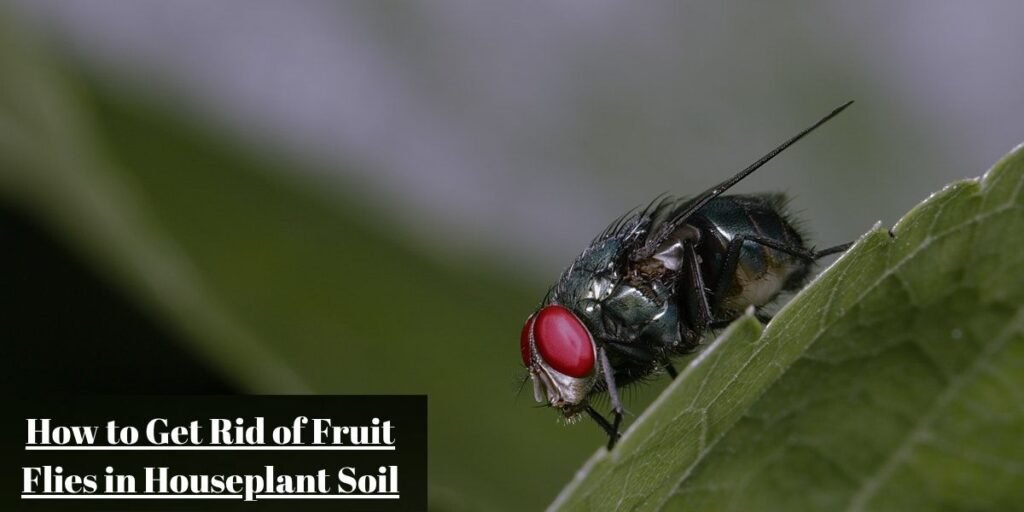
Fungus gnats and true fruit flies belong to entirely different biological families. True fruit flies look stout, feature prominent red eyes, and swarm around garbage disposals, fruit bowls, and recycling bins. Fungus gnats look more like microscopic mosquitoes, move with a weak, erratic flight pattern, and rarely stray far from their home pot unless the population gets completely out of hand.
The easiest diagnostic clue is location. If your kitchen fruit bowl is completely empty and clean, but shaking your houseplant container launches a cloud of tiny bugs into the air, your growing medium is the undisputed source.
Why Tiny Flies Start Breeding in Houseplant Soil
Understanding why these pests move into your pots comes down to basic gardening biology. Fungus gnats are irresistibly attracted to moist, organic-rich growing media, especially when that soil stays wet for extended periods without a chance to breathe.
Several common indoor plant conditions create the perfect breeding ground:
- Watering on a rigid calendar schedule before the soil has dried sufficiently
- Using heavy potting mixes with poor internal drainage
- Planting in decorative cachepots or containers that completely lack adequate drainage holes
- Allowing excess irrigation water to sit stagnant in saucers beneath the pots
- Allowing organic material like dead leaves to accumulate on top of the soil
- Keeping plants tucked away in low-light corners where evaporation happens very slowly
A plant doesn’t necessarily need to be flooded every single day to invite an infestation. Simply watering a bit too frequently for that specific plant species keeps the top inch or two of soil consistently damp, which is all a female fungus gnat needs to lay dozens of eggs.
For years, I made the mistake of thinking I just had a general bug problem, when in reality my watering habits were keeping the soil surface in a permanent state of dampness. Shifting my mindset from treating the symptoms to adjusting the soil moisture changed everything.
Start by Changing How the Soil Dries
Reaching for an expensive insecticide should never be your first move when dealing with fungus gnats. The most effective, natural control method is simply altering the moisture profile of the pot.
The goal isn’t to completely dry out every single houseplant in your collection, since a peace lily and a succulent have completely different moisture requirements. Instead, you need to manage the upper layers of the growing medium wisely:
- Always check the soil depth with your finger before grabbing the watering can
- Let the appropriate upper portion of the mix dry completely between watering sessions
- Make sure excess water can drain freely out of the bottom of the container
- Empty any standing water collected in saucers or decorative cachepots within minutes of watering
- Relocate low-light plants into brighter, better-ventilated spots if their soil takes days to dry
When I want to be entirely certain about soil moisture before reaching for my watering can, I use a simple XLUX soil moisture meter to test deep down in the root zone.
If you normally water your indoor plants every three days because that fits your weekly routine, stop following the calendar entirely. Touch the soil instead.
When I stopped watering on an arbitrary schedule and started waiting until the top two inches of soil felt genuinely dry, the gnat population naturally crashed within a couple of weeks without a single drop of chemical spray.
Use Yellow Sticky Traps to Break Up the Adult Population
Once you adjust your watering habits, you still have to deal with the adult flies currently buzzing around your living space. This is where bright yellow sticky cards become your best friend.
Place your yellow sticky traps right next to the affected pot, positioning them just above the soil line where adult gnats are most active. Bright yellow mimics the light frequencies that attract these insects, causing them to fly straight into the adhesive surface.
Whenever I notice an outbreak in my indoor collection, I immediately place a few Safer Brand Houseplant Sticky Stakes into the affected pots.
Keep in mind that sticky traps have one major limitation: they only catch adults. They do nothing to eliminate the microscopic larvae feeding on organic matter and roots down in the soil.
Because of this, an empty trap doesn’t mean your infestation is completely solved. Instead, view these cards as a reliable diagnostic tool to monitor whether the adult population is actually declining week over week.
Try Simple Household Methods Before Escalating Treatment
Before spending money on commercial biological controls or specialty garden products, several straightforward home methods can help tilt the environment against the pests.
Let the Soil Surface Dry
This remains arguably the most useful home remedy because it directly alters the habitat the larvae need to survive. For houseplants that tolerate a bit of drought, letting the surface of the potting mix dry out thoroughly makes the pot completely inhospitable for new egg-laying.
Remove Dead Leaves and Organic Debris
Take a close look at the top of your potting mix. Clear away fallen leaves, spent flowers, rotting plant material, and any other decomposing debris. This step costs nothing, improves general container hygiene, and removes the primary food source that adult gnats feed on before laying eggs.
Improve Airflow Around the Plant
If a houseplant sits tucked away in a stagnant, humid corner and the soil stays wet for days on end, improving air movement helps the growing medium dry naturally. Avoid blasting delicate foliage with a harsh electric fan; simply avoid keeping densely packed plants in stagnant, unventilated indoor spaces.
Use a Thin Dry Surface Layer Where Appropriate
Some indoor gardening apply a thin top-dressing of coarse sand or specialized horticultural grit to make the soil surface less appealing for egg-laying. Treat this strictly as an optional supporting measure rather than a miracle cure. If the soil underneath remains waterlogged, a layer of sand will not stop an infestation.
What About Apple Cider Vinegar Traps?
Almost every online gardening article suggests setting out small bowls of apple cider vinegar mixed with a drop of dish soap to trap indoor flies.
While that method works wonderfully for true fruit flies in your kitchen, it rarely solves a fungus gnat problem. Vinegar traps are designed for insects attracted to fermentation and sweet decay, whereas fungus gnats are looking for damp earth and decaying root matter.
A small vinegar trap can still serve as a quick diagnostic experiment if you aren’t entirely sure what type of bug you are dealing with. If the trap catches nothing while your sticky cards fill up with gnats, you know your focus belongs entirely on the soil.
Never confuse catching a few random flying insects with actually solving the underlying breeding problem in your pots.
When You Need to Treat the Soil Directly
If your infestation persists even after you fix your watering schedule and set out sticky traps, you need to target the larvae developing down in the root zone.
This is where a targeted biological treatment such as Bacillus thuringiensis israelensis, commonly known as Bti, becomes incredibly useful. Bti is a naturally occurring soil bacterium that targets the digestive systems of gnat and mosquito larvae without harming humans, pets, or your plant roots.
Whenever I have a stubborn pot that refuses to clear up with dry soil alone, I mix a dose of Mosquito Dunks into my watering can, letting pieces of the dunk steep in the water overnight before applying it to the soil.
When using a soil treatment:
- Choose a commercial product explicitly labeled for fungus gnat larvae and indoor plants use
- Follow the manufacturer’s product label instructions precisely
- Continue managing your soil moisture levels diligently
- Keep monitoring adult activity using your yellow sticky cards
Avoid turning your pest control routine into an overwhelming product roundup. Understanding why the treatment works and applying it at the right stage of the lifecycle is far more effective than dumping random household concoctions into your pots.
Should You Use Hydrogen Peroxide on Fungus Gnats?
Hydrogen peroxide frequently pops up in online forums as a cheap home remedy for killing fungus gnat larvae on contact.
A credible, experienced gardener will never tell you that peroxide is a magic bullet. While diluting household hydrogen peroxide with water will fizz and kill some larvae living near the surface, it should never form the foundation of your pest control plan.
The most reliable, long-term approach always follows a proper hierarchy:
- Correct your soil moisture habits first
- Reduce the adult flying population with traps
- Address lingering larvae safely
- Monitor the plant’s recovery over time
If you decide to experiment with a peroxide rinse, remember that improper concentrations or heavy applications can damage delicate root hairs and kill beneficial soil microbes. Always opt for a balanced, gentle approach rather than improvising harsh chemical mixtures that stress your houseplants.
When Repotting Is Actually Worth It
You should never rush to repot every houseplant the moment you spot a few flying bugs. Repotting creates significant physical stress for a plant and is entirely unnecessary for a mild gnat issue.
However, repotting becomes genuinely worthwhile under specific conditions:
- The gnat infestation is severe and completely out of control
- The old potting mix stays wet for unusually long periods due to severe breakdown
- The soil drainage has failed completely and compacted into a dense brick
- The plant is showing signs of root rot or underlying health decline
- The infestation persists despite weeks of corrected watering and surface treatments
When I encounter a root-bound plant with completely degraded medium, I swap out the old dirt for a well-aerated blend like FoxFarm Ocean Forest Potting Soil mixed with extra perlite.
When you do decide to repot, follow a clean process. Remove the plant from its container very gently, brush away as much of the old infested soil from the root ball as practical, wash the pot thoroughly with soapy water, and replant using fresh, high-quality potting mix designed for indoor containers.
Finish the job by settling the plant into a container with proper drainage holes and correcting the watering habits that caused the mess in the first place.
What I Would Do With a Mild Infestation
When I notice just a few stray flies hovering around one of my indoor houseplants, I resist the urge to panic. I don’t immediately dump the plant out of its pot, and I don’t start mixing up complex chemical treatments.
Instead, my personal routine is straightforward:
- I check the moisture level of the soil deep down with my finger
- I inspect the pot to ensure drainage holes aren’t blocked by a saucer
- I clear away any dead leaves or fallen organic debris sitting on the soil surface
- I place a bright yellow sticky trap right beside the pot
Then, I simply step back and watch what happens over the next several watering cycles as the soil dries out properly. In most cases, letting the topsoil dry between waterings is all it takes to break the cycle.
What I Would Do If the Flies Keep Coming Back
If you’ve adjusted your watering habits and set out traps, but those persistent flies keep coming back week after week, it usually points to one of three common issues:
- Your soil is still retaining too much moisture beneath the surface
- Unchecked larvae are still developing deep inside the pot
- Another heavily infested houseplant sitting nearby has been completely overlooked
When an infestation lingers, inspect every single plant sitting in that room, not just the one where you originally spotted the bugs. Treating a single isolated pot while a neglected fern right next to it remains packed with larvae will make the problem feel impossible to solve.
More often than not, a recurring infestation is simply a sign that an adjacent plant is quietly fueling the entire cycle.
How Long It Usually Takes to Get the Problem Under Control
Patience is mandatory when dealing with indoor plant pests. Do not expect a single treatment or a dried-out watering cycle to eliminate every single gnat overnight.
Adult flies will continue emerging for a short time while eggs and larvae already established in the lower root zone complete their final development stages. Judge your success by watching for a steady, noticeable reduction in bug activity rather than expecting total eradication within twenty-four hours.
Realistically, getting a stubborn infestation completely under control can take several weeks, particularly if the population had months to establish itself undisturbed.
How Keep Fungus Gnats From Returning
The best long-term defense against fungus gnats has nothing to do with buying more pest control products and everything to do with practicing mindful everyday plant care.
To keep your indoor collection gnat-free for the long haul, integrate these habits into your routine:
- Check soil moisture levels manually before every single watering
- Avoid watering every plant in your home on the exact same rigid schedule
- Use containers that feature proper, unobstructed drainage holes
- Never let your pots sit in standing water for more than a few minutes
- Promptly remove dead plant material and fallen debris from the top of the soil
- Inspect and quarantine newly purchased plants before placing them near your main collection
- Use fresh, well-aerated potting mix whenever you pot or repot a plant
- Give your houseplants enough light and ambient airflow to let the growing medium dry naturally
The most important lesson to remember is that better control of your growing environment is always more effective than repeatedly trying to kill adult flies after they hatch.
A Simple Three-Step Approach for Most Houseplants
If you want a straightforward, memorable framework to tackle an indoor gnat problem without overthinking it, follow this simple sequence:
Step 1: Dry the Soil Properly
Adjust your watering pattern immediately so the growing medium is no longer kept in a state of constant, soggy dampness.
Step 2: Catch the Adults
Deploy yellow sticky traps near the base of the plant to capture active flying adults and monitor your overall progress.
Step 3: Deal With the Larvae
If the infestation refuses to clear up, apply a targeted biological treatment like Bti to the soil or consider repotting if the growing medium itself has broken down beyond repair.
Questions Gardeners Usually Ask
Are the flies in my houseplant soil actually fruit flies?
No. True fruit flies are attracted to fermenting food and kitchen waste, whereas the tiny insects emerging from your potting soil are almost always fungus gnats that breed in damp organic growing media.
Why do tiny flies come out when I water my plants?
Watering disturbs the adult gnats resting on the soil surface and forces them into flight, while the sudden influx of moisture activates movement among larvae and pupae living just beneath the top layer of dirt.
Will letting houseplant soil dry out kill fungus gnats?
Yes, allowing the upper inches of the potting mix to dry out thoroughly between waterings deprives the delicate larvae of the moisture they need to survive, effectively breaking the breeding cycle.
Does vinegar get rid of fungus gnats?
Apple cider vinegar traps work well for kitchen fruit flies, but they are not effective for fungus gnats because those soil-dwelling pests are not attracted to fermented fruit sugars.
Can I use hydrogen peroxide for fungus gnats?
While diluted hydrogen peroxide solutions can kill some surface larvae, they should not replace proper moisture management, and improper mixes risk damaging sensitive plant roots and beneficial soil microbes.
Should I replace the soil if my plant has fungus gnats?
You only need to replace the soil if the infestation is severe, the potting mix has completely broken down, or the drainage has failed; otherwise, correcting your watering habits and treating the larvae is usually enough.
How long does it take to get rid of fungus gnats?
Because existing eggs and pupae take time to hatch, expect the cleanup process to take two to three weeks of consistent moisture management and trapping before the population completely disappears.
Can fungus gnats damage houseplants?
While adult gnats are mostly an annoying nuisance, large populations of ravenous larvae can feed on fine root hairs, stunting the growth of young seedlings and delicate houseplants.