
Electricity serves as the invisible nervous system of every modern residence. While it operates with seamless efficiency most of the time, the underlying infrastructure is subject to thermal fatigue, mechanical vibration, and the slow creep of material degradation.
Homeowners often treat the electrical system as a static utility. In reality, it is a dynamic environment that must handle ever-increasing demands from high-wattage kitchen appliances, multi-zone HVAC systems, and the heavy load of electric vehicle charging stations.
Safety is not a static state but a continuous process of maintenance and technical reinforcement. Many of the most dangerous conditions, such as resistive heating at loose terminals or internal arcing within walls, occur without any outward symptoms until a catastrophic failure takes place.
A safe home relies on a holistic architecture of protection devices, correct grounding, and the vigilance to recognize when the system is operating outside its designed parameters.
Understanding the Most Common Electrical Hazards in Homes
The degradation of residential wiring systems is rarely an overnight event. It is a cumulative process driven by the laws of physics. The most significant threat in any aging or overloaded system is the development of an electrical arc.
Arcing happens when the electrical current finds an unintended path through the air, often caused by damaged cable jackets, loose screw terminals in receptacles, or aging wire insulation that has become brittle due to decades of thermal cycling.
These arcs do not always trip a standard circuit breaker. Instead, they can sustain temperatures exceeding 5000 degrees Fahrenheit, which is more than sufficient to ignite wood studs, insulation, or drywall paper. This silent ignition source is why arc fault protection has become a mandatory requirement in modern electrical codes.
Shock hazards represent the second major category of risk. In locations where water proximity is high, such as kitchens or outdoor living spaces, the resistance of the human body to electrical current can drop significantly. If a fault occurs and the grounding path is compromised, a person can become the path of least resistance to the earth. This is why ground fault detection is fundamentally distinct from overcurrent protection.
Power surges also warrant a sophisticated understanding. While lightning receives the most attention, the majority of damaging voltage spikes are generated internally. When a large motor like a refrigerator compressor or an HVAC blower shuts down, it can induce a transient voltage spike back into the home electrical system.
Over time, these cumulative transients fatigue the sensitive microprocessors inside smart appliances, televisions, and HVAC control boards, leading to premature electronic failure.
Essential Electrical Protection Devices Every Home Should Have
The modern electrical panel is no longer just a collection of fuses or simple breakers. It is a highly engineered safety hub. The base level of protection remains the circuit breaker, which is designed strictly to protect the wiring itself from overheating due to excessive amperage. If you pull too much current through a circuit, the breaker trips to prevent the wire from melting. This is a coarse level of protection that ignores more nuanced threats.
Arc Fault Circuit Interrupters (AFCI) address the fire risk mentioned previously. These devices use internal microprocessors to monitor the electrical signature of the circuit. They look for specific frequency patterns that indicate an arc is occurring. If the device senses a dangerous arc, it interrupts the power in a fraction of a second. Installing AFCIs is the most effective step to prevent fires originating from behind the walls of bedrooms and living areas.
Ground Fault Circuit Interrupters (GFCI) are the primary defense against lethal electric shock. A GFCI device measures the current leaving the hot wire and returning on the neutral wire. If there is even a five milliampere discrepancy, it indicates that current is leaking somewhere, potentially through a person. By cutting the power within milliseconds, the GFCI renders what would have been a fatal shock into a non-lethal event.
Whole-House Surge Protection functions differently from the small power strips sold at retail stores. A professional-grade whole-house device is mounted at the service panel. Its job is to detect high-voltage transients on the incoming utility line and shunt that excess energy safely to the ground before it can enter your interior branch circuits. This is your primary defense against utility-side switching events and secondary lightning effects.
Home Electrical Safety by Home Type
The era in which your home was built provides a roadmap of the potential electrical issues you might face. Homes constructed before 1980 often present specific challenges.
In some cases, you may find aluminum branch wiring, which has a higher coefficient of expansion than copper and can loosen at connection points, leading to fires. Many older homes also lack proper grounding at their receptacles, which renders three-prong outlets functionally unsafe even if they appear to be standard.
Modern homes encounter a different set of problems. They are built to high standards of safety, but they are also subjected to extreme load densities. The modern home office, paired with high-efficiency LED lighting and smart automation, creates a complex demand profile.
When you add high-load appliances like heat pumps or electric vehicle chargers, you reach the physical capacity of a standard 100-amp or even 200-amp electrical service much faster than homeowners did in the past.
Homes equipped with Solar Photovoltaic (PV) systems add a layer of complexity known as DC-to-AC conversion. Because solar systems involve high-voltage direct current that cannot be easily extinguished if an arc occurs, they require specialized rapid shutdown equipment and arc fault detection specifically rated for DC circuits.
If you have solar panels, your electrical system is effectively a micro-utility, and it requires surge protection on both the AC utility side and the DC array side to protect the inverter from damage.
Homes with Backup Generators and EV Charging
Backup generators provide essential resilience, but they introduce a significant risk if installed without a proper transfer switch. If a generator is connected to your home wiring without a mechanism to disconnect from the utility grid, it can cause backfeeding. This sends electricity back out through the utility lines, creating a lethal hazard for power company linemen working on the system during an outage.
Every permanent generator installation must utilize an interlock kit or a transfer switch that physically prevents the utility and the generator from ever connecting to the home at the same time.
Electric vehicle chargers have similarly shifted the electrical load profile of the modern garage. A Level 2 charger typically draws between 30 and 50 amperes, which is often as much as a small apartment or a large central air conditioner. You cannot simply plug these into an existing outlet.
A professional installation requires a dedicated circuit sized to the vehicle charger specifications, a ground fault protected breaker, and a careful calculation of your existing service capacity. If your current service panel is maxed out, installing an EV charger could cause frequent breaker trips or even lead to the main service panel overheating.
Climate-Based Electrical Safety Considerations
Environmental conditions dictate the lifespan of your electrical equipment. In regions with frequent lightning, the intensity of utility grid transients is significantly higher. In these areas, the installation of multi-stage surge protection is recommended. This layered approach places protection at the utility entrance, at the distribution panel, and finally at the point of use for sensitive equipment like televisions and desktop computers.
Coastal environments subject outdoor electrical components to salt-laden air, which acts as a catalyst for galvanic corrosion. If you live within a few miles of the ocean, all outdoor receptacles, disconnect switches, and solar inverters must be rated for high-grade corrosion resistance. Standard galvanized boxes will rust through within years, exposing live wires to the elements.
Extreme heat regions introduce a different set of physical stresses. Every circuit breaker is rated to operate at a specific temperature, usually 40 degrees Celsius. When your electrical panel is located in a garage that reaches 110 degrees in the summer, the capacity of those breakers is effectively reduced.
This is why you may experience nuisance trips during the hottest days of the year even if your actual electrical load is unchanged. In these climates, ensuring proper ventilation around the electrical panel is vital to maintaining system stability.
Electrical Panel Safety and Maintenance
The electrical panel is the central nervous system of the residence. It requires a visual assessment every few years to identify creeping failure modes. Open the panel cover only if you are trained to do so, otherwise hire a professional. Look for signs of heat. Discoloration on the bus bars, melted insulation on the conductors, or breakers that feel hot to the touch are immediate indicators of a loose connection or a failing component.
Buzzing sounds are a clear sign of an imminent problem. A steady hum often indicates a vibrating contact or a loose screw terminal on the main feed. If left unaddressed, the resistance at the connection point will increase until it creates a thermal event.
Similarly, if you notice that a specific breaker trips repeatedly, do not simply replace it with a larger breaker. The breaker is doing its job by signaling that the circuit is overloaded or that there is a fault. Installing a 30-amp breaker on a wire designed for 15 or 20 amps is a direct path to an electrical fire.
When an electrical panel upgrade becomes necessary, it is rarely due to a single event. It is usually because the cumulative load of modern life has outpaced the original design. If you are adding a new hot tub, an EV charger, or a central air unit, the panel must be evaluated by a licensed electrician to determine
if the total demand factor requires a main service upgrade from 100 amps to 200 amps. An overcrowded panel is a liability, as it limits your ability to add future safety devices like AFCI breakers.
Extension Cord and Power Strip Safety
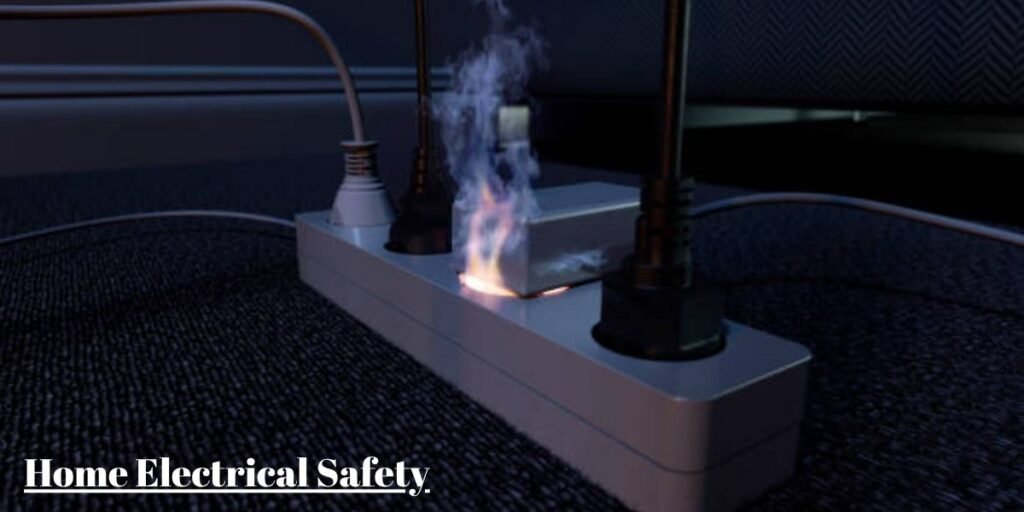
Extension cords are a frequent source of fire due to basic physical misuse. They are designed exclusively for temporary power delivery. When a cord is run underneath a rug, it becomes insulated, trapping the heat it naturally generates during use. This leads to the deterioration of the internal conductors and the eventual melting of the outer jacket.
Similarly, running cords through walls, ceilings, or doorways hides them from inspection and risks pinching them, which can cause internal wire breakage and localized overheating.
Daisy-chaining, or plugging one power strip into another, is another critical violation of electrical safety. Every power strip is designed with a specific ampacity limit. When you connect multiple strips in a series, you effectively create a long, high-resistance path that can easily exceed the rating of the first cord in the chain.
If you find yourself relying on power strips for permanent appliance usage, your home lacks sufficient outlets. The permanent solution is to hire a licensed electrician to install additional dedicated circuits and wall receptacles in the areas where you need power.
Smart Home Electrical Safety
The rise of smart lighting and automated security systems has integrated electrical infrastructure with networking components. Smart switches and outlets require a neutral wire to function, which is not present in every legacy home switch box.
Attempting to force these devices into boxes that do not have a neutral can cause flickering, radio frequency interference, and potential damage to the switch internal logic.
Security is also a factor. A smart device with outdated firmware acts as a gateway for potential network intrusions. When you install smart switches, light bulbs, or climate controllers, ensure they are connected to a secure, password-protected network and perform regular firmware updates as released by the manufacturer.
If a smart outlet begins to feel warm to the touch or fails to disconnect power completely when turned off in the app, it is likely experiencing a failure of its internal relay and should be replaced immediately.
Electrical Safety Inspection Checklist
Proactive maintenance prevents the vast majority of residential electrical fires. You should adopt a structured approach to monitoring your system.
Monthly, test every GFCI outlet using the test and reset buttons to ensure the internal mechanism functions. Check for any smoke detectors or carbon monoxide alarms that have exceeded their manufacturer lifespan, which is usually seven to ten years.
Annually, perform a visual inspection of your electrical panel. Ensure that no breakers are labeled with temporary or handwritten scribbles that you cannot understand. Verify that the panel door closes properly and that there are no gaps where debris could enter.
Every three to five years, schedule a full audit with a certified electrical inspector or a master electrician. This professional should verify the condition of the grounding electrode, test the continuity of the grounding system, and check for signs of nuisance trips that might indicate underlying circuit fatigue.
Signs You Need an Electrician Immediately
If you notice a burning smell that disappears and reappears, do not dismiss it. It is often a sign of a terminal block that is heating up under load. Similarly, if you notice the lights in your home dimming significantly when the refrigerator or air conditioner kicks on, this indicates a voltage drop that could be caused by a loose connection on the main service neutral.
Any sparking or popping noise from an outlet, even if it happens only once, is a non-negotiable indicator that the receptacle has reached the end of its life. Never attempt to tighten the contacts in an outlet. Replace the device with a high-quality commercial-grade equivalent.
If your home has a history of flickering lights or if you have recently experienced a surge that knocked out electronic components, have your grounding system and surge protection hardware professionally tested for integrity. Professional intervention at the first sign of an anomaly is the most cost-effective way to prevent a major emergency.
Building a Layered Electrical Protection Strategy
Professional safety is never the result of a single component. It is the product of an architectural philosophy known as Defense in Depth. You are building a system where each layer is designed to catch failures that the layer below it might miss.
- Grounding. This is the bedrock of your system. A robust grounding electrode system ensures that fault current has a low-impedance path to the earth. Without it, your surge protection and circuit breakers cannot function as intended.
- Overcurrent Protection. Modern circuit breakers act as the second layer, stopping the physical melting of wires during a short circuit.
- Fire Prevention. AFCI technology occupies this layer, identifying the specific electrical signatures of arcing that standard breakers are blind to.
- Personnel Protection. GFCI devices provide the essential safety net for humans, reacting to leakage current that could otherwise be fatal in wet or high-risk environments.
- Transient Suppression. Whole-house surge protection serves as the outer shield, blunting the force of external and internal voltage spikes before they reach your sensitive downstream electronics.
Each of these layers operates independently but contributes to a singular outcome. If your surge protection fails during a massive storm, your breakers are still there to prevent a fire. If an outlet is wired incorrectly, your GFCI protection acts as the final safeguard for your life. This redundancy is what separates a code-compliant home from a truly secure one.
Final Thoughts
Home electrical safety extends far beyond the basic habits of avoiding overloaded power strips or replacing frayed cords. Modern residential environments are increasingly complex, carrying the electrical load of high-performance climate control, home offices, solar arrays, and high-capacity vehicle charging systems.
The most successful approach to safety is one that emphasizes prevention over reaction. By investing in modern arc fault and ground fault protection, implementing a comprehensive whole-house surge strategy, and committing to periodic professional inspections, you shift from a model of reactive repairs to one of proactive risk mitigation.
Electrical hazards often develop in complete silence, hidden behind wall cavities or within the recesses of your service panel. When you monitor your system for warning signs, such as flickering lights, unusual buzzing, or persistent breaker trips, you gain the ability to intervene before a failure becomes an emergency.
Maintaining your home electrical infrastructure is not just a maintenance task. It is a direct investment in the long-term safety of your family and the structural integrity of your most valuable asset.