

Designing a small outdoor space requires a clear strategy that balances visual appeal with day-to-day functionality. Search queries linking Decoradhouse garden tips by DecoratorAdvice reflect a growing demand for practical advice tailored to compact areas like urban balconies, narrow courtyards, and small paved patios. Readers searching this specific topic generally fall into two categories: those trying to understand the source and credibility of these online platforms, and those seeking actionable layout and planting strategies for limited square footage.
This article addresses both aspects directly. It begins by examining what DecoradHouse and DecoratorAdvice represent within the digital home improvement space, establishing their actual content scope without exaggerating their industry standing. Following that background, it delivers a detailed framework for evaluating, planning, and planting a small garden. Every recommendation focuses on spatial efficiency, plant health, and long-term maintenance realities.
What Are DecoradHouse and DecoratorAdvice?
Understanding the origin of online home improvement advice helps readers evaluate its practical value. DecoradHouse operates as a digital publication focused on general home decoration, architectural ideas, and basic landscape concepts. Its platform covers indoor styling, property upgrades, and general garden suggestions intended for broad residential audiences.
DecoratorAdvice functions as an online content hub that publishes articles on interior design, exterior living spaces, and home maintenance. Within its site structure, specifically on its about and category pages, the phrase Decoradhouse garden tips is listed as a featured topic area. This explicit cross-reference explains why search engines frequently associate these two terms.
While both websites aggregate popular design ideas, readers should recognize that published content online serves as general inspiration rather than custom horticultural engineering. Their recommendations offer helpful creative starting points, but practical success depends on adapting those ideas to specific site conditions, local microclimates, and actual structural constraints.
What Kind of Gardening Advice Does DecoratorAdvice Cover?
The outdoor content published across these digital platforms spans several core categories designed to help homeowners maximize their living areas. Understanding how these topics break down helps readers find the specific guidance they need for their own projects.
- Garden planning and spatial organization: Guidance on mapping small footprints, selecting container sizes, and establishing functional zones for dining or resting.
- Outdoor decorative concepts: Strategies for integrating textiles, lighting, color schemes, and decorative pots to enhance visual appeal.
- Property improvement and flow: Methods for creating seamless transitions between indoor living rooms and exterior patios or balconies.
While these topics cover the primary elements of modern residential design, general advice cannot account for every geographic variable. A plant arrangement suggested for a mild coastal region will fail in an area subject to severe frost or intense dry heat. Treating online tips as adaptable frameworks rather than rigid rules ensures far better results in practice.
Assess a Small Garden or Patio Before Buying Plants
Unplanned purchases remain the most common cause of failed small gardens. Before buying containers, soil, or nursery stock, a thorough site assessment must be conducted to establish the true environmental baseline of the space.
Begin by measuring the actual usable footprint. Record precise dimensions and mark the position of outward-swinging doors, exterior water spigots, electrical outlets, drainage grates, and access pathways. Subtracting these utility zones reveals the genuine space available for pots and furniture.
Track sunlight patterns continuously across a full 12-hour summer day. Note which areas receive direct morning sun, intense midday heat, or persistent afternoon shade. A site receiving 6 or more hours of direct overhead sun classifies as full sun, whereas an area shaded by adjacent walls for most of the day requires shade-tolerant species regardless of regional temperatures.
Observe localized atmospheric conditions. High-rise balconies often experience severe wind exposure that rapidly desiccates foliage and destabilizes lightweight pots. Patios enclosed by brick or concrete trap thermal energy, raising ambient temperatures significantly above regional forecasts during hot periods.
Evaluate water behavior during heavy rain. Identify whether rainwater drains away efficiently or pools along wall foundations. Poor surface drainage damages root systems and limits where heavy containers can safely rest.
Choose a Layout That Works for the Size of the Space
Layout decisions in a compact garden dictate whether the space feels structured or cluttered. Traffic flow must take priority over decorative additions to ensure the patio remains comfortable for daily use.
Primary access routes require a clear walking width of at least 36 inches. Pathways leading to doorways, storage sheds, or seating areas should remain completely unobstructed by low pot rims or trailing plant stems.
The geometry of the space dictates the most effective arrangement strategy:
- Narrow, linear patios: Benefit from a single-line arrangement along one primary wall, keeping the opposite side clear to maintain circulation.
- Square courtyards: Allow for perimeter planting paired with a centered focal point, such as a compact bistro dining set.
- Deeply shaded alcoves: Work best when reserved for utility storage or shade-tolerant foliage groupings rather than high-maintenance flowering plants.
Utilize corners effectively. Positioning tall, slender containers in corners captures dead space without encroaching on central walking zones. Always preserve clear access to drainage points, hose bibs, and utility meters to prevent routine maintenance from becoming a major hassle.
Select Container Plants That Suit Your Conditions
Container gardening converts paved areas and small balconies into productive green spaces, eliminating the need for traditional in-ground planting beds. However, long-term plant health depends entirely on choosing root vessels that match the biological requirements of each species.
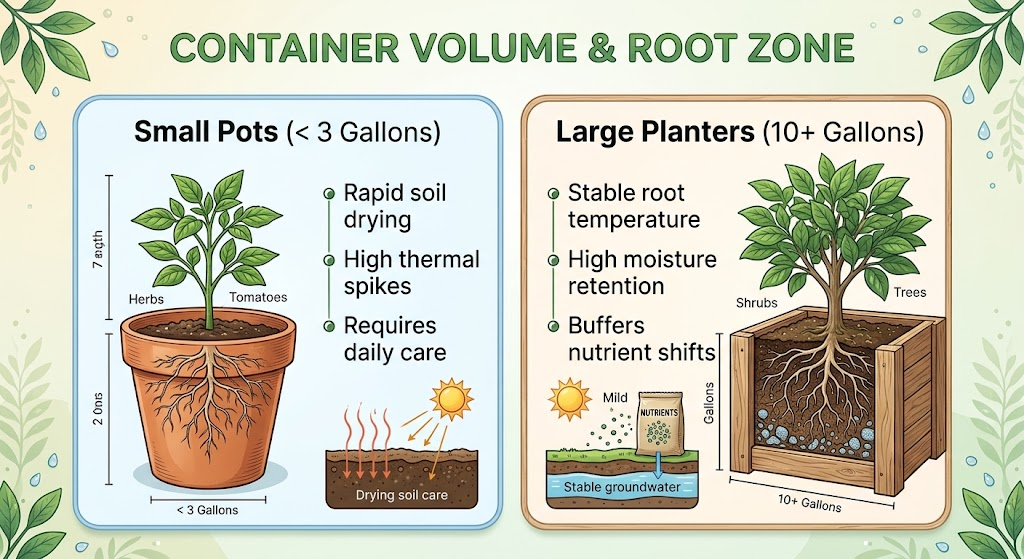
Soil volume dictates root buffer capacity. Containers with a volume below 3 gallons experience rapid evaporation and severe soil temperature fluctuations during warm afternoons. Planters holding 10 gallons or more provide stable moisture levels and insulate root networks against cold drops and intense heat spikes.
Drainage engineering is mandatory for pot success. Verify that containers possess dedicated bottom drainage openings; relying on gravel layers at the bottom of solid pots creates a perched water table that accelerates root rot.
- Container material dynamics: Terracotta pots allow gas exchange through porous clay walls but dry out quickly in direct sun; lightweight composite or resin containers hold moisture effectively, though dark finishes absorb excessive solar heat.
- Potting substrates: Never use dense topsoil or native garden dirt in containers, as it compacts under frequent watering and chokes root oxygen. Formulate or purchase a loose, bark-based or peat-perlite potting mix specifically blended for container aeration.
Use Vertical Space Without Creating New Maintenance Problems
Exploiting vertical surfaces frees up floor space on small patios, but vertical setups require structural caution and careful access planning.
Anchoring systems must support wet soil weight. A fully saturated 24-inch vertical wall planter can weigh over 40 pounds, easily tearing weak masonry anchors out of stucco or exterior siding. Secure structural mounting plates directly into solid wall studs or heavy masonry.
Climbing species require specific support mechanisms:
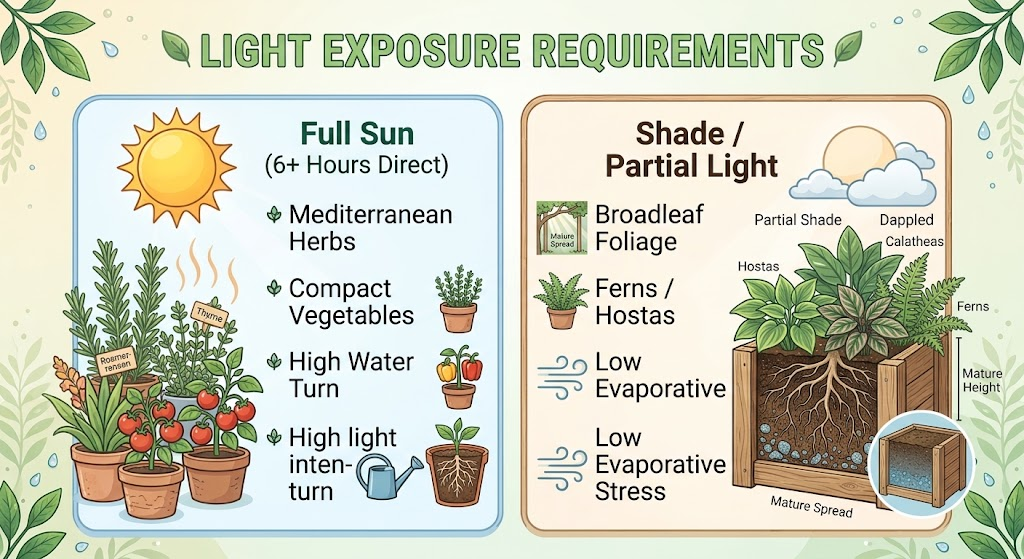
- Self-climbing vines: Species with adhesive tendrils or holdfasts grow directly on brick, but they can degrade mortar over time.
- Trellis-dependent climbers: Plants needing twining support benefit from a standalone metal or timber grid offset 2 inches from the wall surface to allow essential airflow behind the foliage.
Hanging baskets present severe drying challenges due to 360-degree wind exposure. Mount hanging hooks at heights that permit easy hand-watering with a standard can or wand, avoiding awkward overhead reaches that lead to inconsistent care.
Choose Plants for Local Climate, Sunlight, and Available Care
Plant survival requires aligning light exposure and local environmental hardiness with the actual time available for daily upkeep.
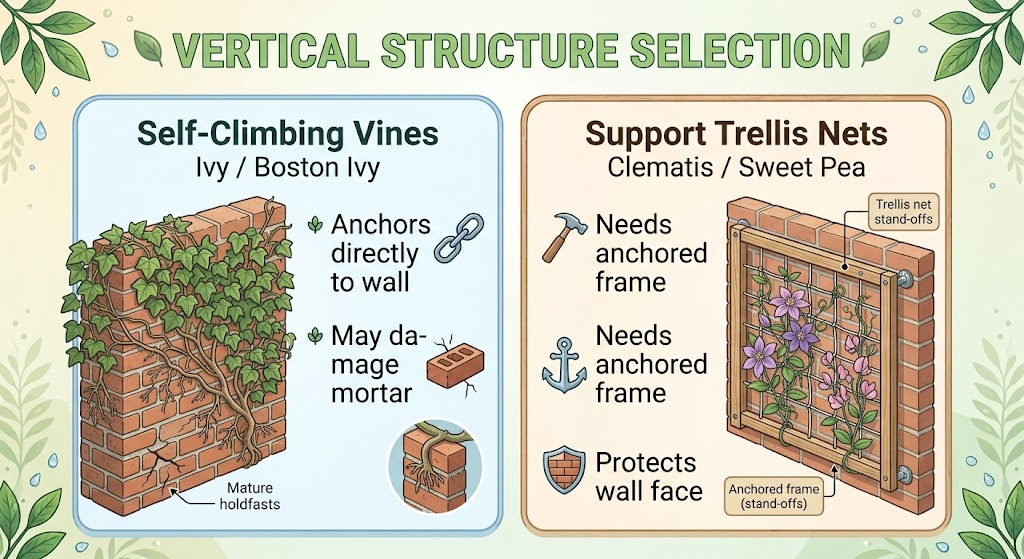
Group species by exact light requirements:
- Full sun locations (6+ hours of direct sun): Mediterranean herbs like rosemary and thyme, compact tomato cultivars, dwarf citrus, and sun-tolerant succulents thrive under intense exposure.
- Shaded corridors or covered balconies: Broadleaf evergreens, Japanese maple cultivars, hostas, ferns, and heuchera hold structural color without burning under UV stress.
Select varieties based on mature height and spread rather than initial nursery size. Compact or dwarf cultivars prevent rapid overcrowding and reduce the frequency of pruning required to keep pathways clear.
Be realistic about maintenance availability. High-evaporation potted setups during mid-summer may demand twice-daily checks. If personal schedules limit watering to twice a week, prioritize drought-tolerant species or install automated drip lines connected to a hose timer.
Make a Small Garden Look Cohesive Rather Than Crowded
Visual clutter degrades small outdoor spaces faster than physical crowding. A unified material palette brings order to a small patio.
Limit container materials to two complementary textures or finishes—such as terracotta paired with natural wood, or matte charcoal stoneware matched with zinc planters. Mixing multiple plastic styles, glazed pottery colors, and wire stands creates visual confusion that makes a patio feel smaller.
Establish a singular visual anchor point. Position one oversized container with a structural plant, an architectural water bowl, or a clean seating bench along the primary sightline. Arrange secondary pots around this anchor in odd-numbered clusters (groups of three or five) of varying heights to establish depth without scattering pots across every square foot.
Keep floor surfaces visually clear near entryways. Leaving an open paved area near access points preserves open sightlines, making the surrounding planting appear intentional rather than overgrown.
Add Seating and Lighting According to How the Patio Is Used
Outdoor furniture must match the footprint of the space. Oversized dining sets block foot traffic and make routine plant care frustrating.
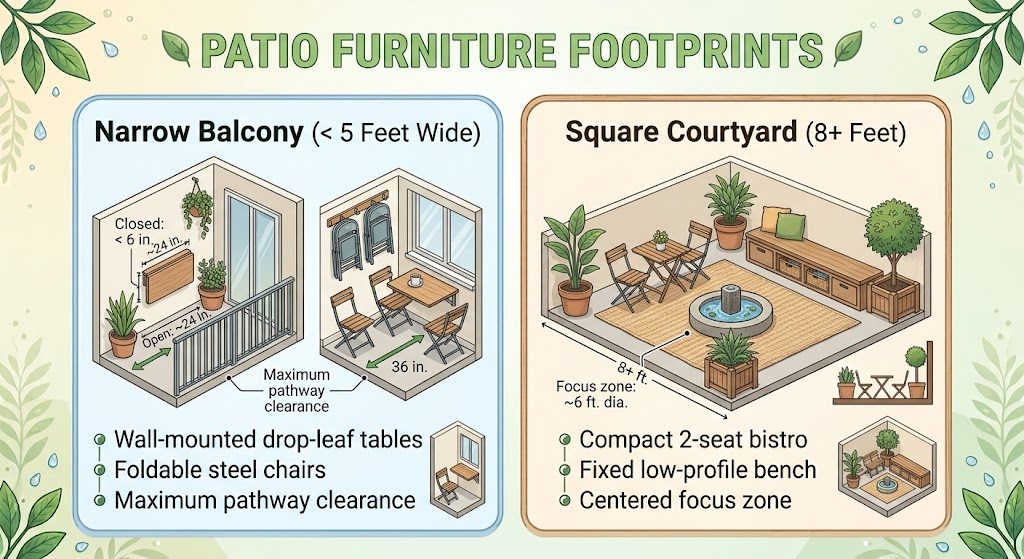
Select furniture proportional to the usable floor area:
- Patios under 5 feet wide: Utilize wall-mounted drop-leaf tables and foldable chairs that hang flat against wall hooks when not in use.
- Courtyards over 8 feet wide: Accommodate small bistro sets or low-profile built-in bench seating along perimeter walls.
Select exterior-grade materials suited to local climate realities. Teak and cedar resist rot naturally but require periodic sealing; powder-coated aluminum resists corrosion in coastal, salt-heavy air; woven synthetic wicker withstands moisture but degrades under high UV without protective covers.
Install exterior illumination thoughtfully. Avoid harsh overhead floodlights that create glare. Instead, use soft warm-white LED accents (2700K to 3000K) placed low along pathway borders or tucked behind container rims to illuminate foliage textures without overwhelming night views. Ensure all electrical connections use weatherproof, outdoor-rated fixtures and code-compliant GFCI outlets.
Keep Container Gardens Healthy Without Excessive Work
Routine maintenance prevents minor container problems from spiraling into total plant loss.
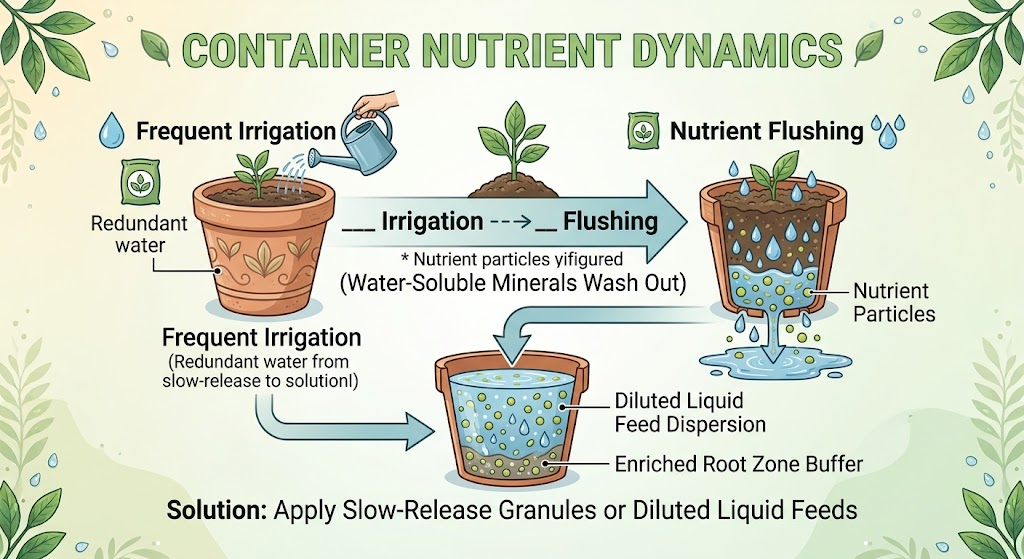
Check soil moisture manually before reaching for the hose. Insert a finger or moisture probe 2 inches into the potting medium; if soil clings and feels cool, hold off on watering. Overwatering in container setups starves roots of oxygen, leading to leaf drop that mimics drought stress.
Nutrient management requires a steady hand. Because regular irrigation washes soluble minerals out through bottom drainage holes, potted plants depend on consistent feeding. Incorporate a slow-release granular fertilizer into the potting mix at spring planting, supplementing with half-strength balanced liquid fertilizer during active growth phases.
Prune spent flowers and damaged foliage weekly to encourage fresh growth and maintain air circulation. Inspect the undersides of leaves regularly for spider mites, aphids, or scale, addressing pest outbreaks early with targeted horticultural soaps before infestations spread throughout dense container groupings.
Improve the Garden in Stages Instead of Spending on Everything at Once
Phased execution protects budgets and allows gardeners to learn how a site behaves across seasons before making major investments.
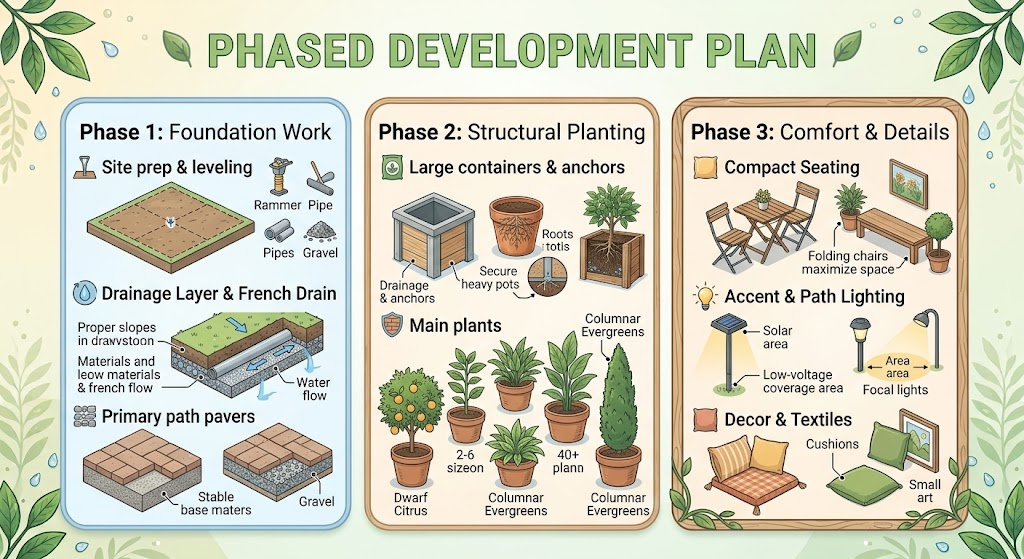
Direct early funds toward structural foundations first:
- Phase 1: Foundation Work: Correct site drainage issues, repair damaged wall surfaces, set level primary path pavers, and install French drains or gravel layers.
- Phase 2: Structural Planting: Purchase large-volume planters, add high-quality potting substrates, and establish main green anchor points with columnar evergreens or dwarf trees.
- Phase 3: Comfort and Details: Introduce compact seating, solar or low-voltage path lighting, protective outdoor cushions, and secondary decorative accents.
Spreading improvements over multiple months helps refine design choices. Observing how early plantings adapt to summer heat or autumn wind informs smarter choices for subsequent additions, avoiding expensive trial-and-error purchases.
Mistakes to Avoid When Following Online Garden Tips
Online design inspiration offers helpful ideas, but applying tips without adjusting for site conditions can cause practical issues.
Avoid these common container garden pitfalls:
- Ignoring localized sun conditions: Buying sun-loving nursery plants for a deeply shaded courtyard based on decorative photos.
- Selecting pots without drainage holes: Choosing decorative ceramics that lack bottom outlet holes, leading to waterlogged soil and root rot.
- Overloading structural balconies: Placing massive stone or concrete planters on cantilevered apartment balconies without confirming structural weight limits.
- Blocking primary access points: Placing pots along narrow walkways where foliage impedes movement or covers utility access panels.
- Adhering to rigid watering calendars: Watering on strict calendar intervals rather than checking actual soil moisture levels.
Digital ideas should serve as flexible inspiration. Verifying environmental compatibility, structural safety, and plant needs ensures a long-lasting, low-stress outdoor space.
Frequently Asked Questions
What is Decoradhouse garden tips by DecoratorAdvice?
It refers to garden and landscape content published by digital home platforms like DecoradHouse and DecoratorAdvice. The phrase reflects topics covering small-space outdoor layouts, container gardening, and patio styling.
What does DecoradHouse offer for garden and patio improvement?
DecoradHouse publishes general guides on home decoration, architectural ideas, and basic landscape organization. Its site provides conceptual ideas for maximizing compact living spaces and outdoor areas.
Where can readers find DecoratorAdvice garden tips?
Gardening articles can be accessed directly on DecoratorAdvice.com within its home improvement and outdoor living categories.
How do you design a garden in a small space?
Begin by measuring the footprint, mapping sunlight exposure across the day, and keeping pathways clear. Use vertical walls for climbing plants, group containers by height, and select multi-functional furniture proportional to the patio.
Which plants are suitable for a small patio?
Plant selection depends on light, wind, and pot volume. Full-sun patios suit Mediterranean herbs, compact tomatoes, and dwarf citrus. Shaded patios perform better with ferns, hostas, Japanese maples, and broadleaf evergreens.
How can a small patio garden be made easier to maintain?
Choose larger containers that hold moisture longer, use high-quality potting mixes, and group plants with similar water needs. Check soil moisture before watering and select compact plant varieties to minimize heavy pruning.
