

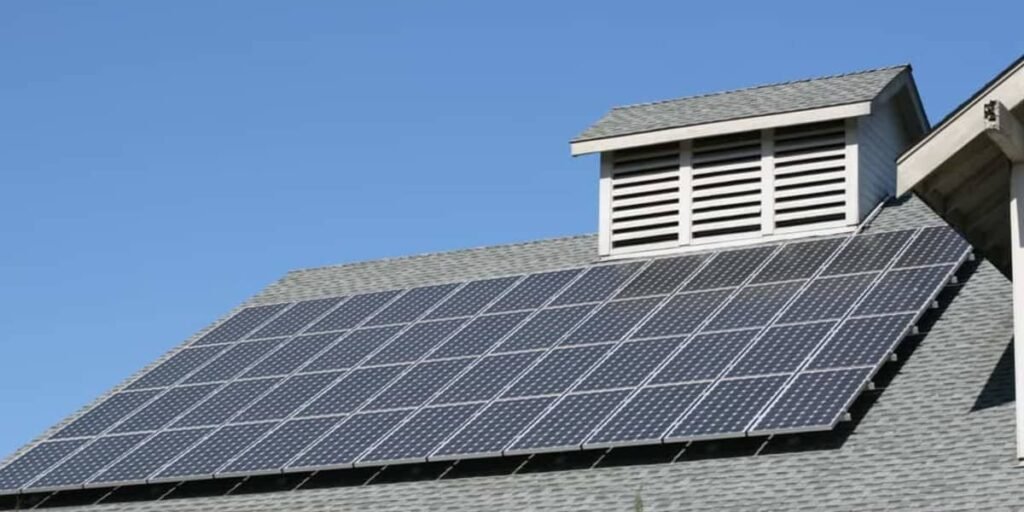
Residential energy independence has officially crossed a major economic and technological threshold. As traditional utility rates climb much faster than baseline inflation indexes, millions of homeowners are actively moving away from total grid dependency and investing in private solar photovoltaic infrastructure.
According to comprehensive market intelligence data from the U.S. Energy Information Administration (EIA) and the Solar Energy Industries Association (SEIA), cumulative national capacity has cleared over 6 million residential installations. This massive market surge reflects a fundamental shift in how modern households view utility management, turning rooftop solar from an experimental alternative energy niche into a mainstream, high-value home infrastructure asset.
Complementing this widespread market adoption, long-term field studies published by the National Renewable Energy Laboratory (NREL) demonstrate that properties equipped with professionally engineered arrays achieve lifetime electricity bill reductions exceeding 50%.
Furthermore, NREL reliability data tracking over 100,000 systems reveals that 80% to 90% of arrays perform within 10% of their predicted output, proving exceptional multi-decade durability against severe weather and thermal cycling. However, capturing these financial milestones requires moving far beyond generic marketing brochures and surface-level equipment comparisons.
A successful solar investment begins long before installation day, demanding a comprehensive evaluation of your household energy consumption, local utility tariff rules, roof geometry, and precise electrical load requirements.
Is Solar the Right Choice for Your Home?
Evaluating whether photovoltaic technology makes sense for your property requires an objective look at structural and financial metrics rather than relying on promotional marketing claims. Solar makes the strongest economic sense in regions featuring favorable net-metering policies or high retail electricity rates where surplus daytime generation offsets expensive evening grid purchases.
According to regional grid studies, properties featuring unshaded, south- or west-facing roofs with structural lifespans exceeding the expected 25-to-30-year operational window of the photovoltaic array benefit the most.
Conversely, properties burdened by heavy tree cover, complex roof shading, or aging asphalt shingle roofs requiring near-term replacement make poor candidates. Installing panels over a roof near the end of its structural life cycle triggers costly removal and reinstallation expenses down the line, completely wiping out initial energy savings.
Additionally, short-term renters or homeowners planning to relocate within two to three years rarely recover their initial capital investment before moving, making upfront feasibility assessments vital.
Let Your Electricity Bills Guide the System You Need
Professional solar contractors never size a system by guessing or relying on rough estimates. Instead, they begin by auditing 12 consecutive months of historical utility bills to understand your complete household energy profile and seasonal consumption patterns. Reviewing annual kilowatt-hour (kWh) consumption establishes your baseline usage, while examining monthly billing trends reveals seasonal swings driven by heavy air conditioning loads during summer or electric heating demands in winter. A comprehensive load analysis must also separate daytime baseline consumption from evening energy demand peaks.
Future household electricity increases must be factored into the sizing equation as well to prevent premature system obsolescence. Incorporating an electric vehicle (EV) charger, an air-source heat pump system, a swimming pool filtration pump, or future home additions can easily add 3,000 to 7,000 kWh of annual electricity demand, rendering an undersized system inadequate within a few short years of operation.
Choosing the Right Type of Solar System
Grid architecture dictates how your home interacts with generated electricity and manages emergency power availability.
Grid-Tied Solar Systems
Grid-tied solar systems connect directly to your local utility grid without battery storage, representing the most cost-effective option for urban homes enjoying stable grid power. They offer fast financial payback periods and significantly lower upfront capital expenses because they eliminate the need for costly battery banks. However, they automatically shut down during grid blackouts for safety compliance, preventing dangerous backfeeding of electricity into damaged utility lines.
Hybrid Solar Systems
Hybrid solar systems integrate Lithium Iron Phosphate (LiFePO4) battery storage with a hybrid inverter, allowing homes to store surplus daytime solar generation for evening self-consumption or emergency backup during grid outages. This setup effectively bridges the gap between energy independence and grid reliance, protecting households from rolling blackouts, grid instability, and aggressive peak pricing structures.
Off-Grid Solar Systems
Off-grid solar systems operate completely independent of utility infrastructure, requiring high-capacity battery banks, backup generators, and complex charge controller arrays. They are practical primarily for remote rural properties where utility grid extension costs are prohibitively expensive, though they demand higher ongoing maintenance and larger upfront budgets.
| System Type | Upfront Cost | Backup Power | Maintenance | Best Use Cases | Typical Homeowner |
| Grid-Tied | Lowest | None | Minimal | Stable grid access, active net-metering policies | Urban homeowner focused on minimizing utility bills |
| Hybrid | Moderate to High | Automatic (Critical Loads) | Low (Battery health checks) | Frequent utility load-shedding, time-of-use rates | Homeowner wanting energy security and savings |
| Off-Grid | Highest | Full Property | High (Generator and battery upkeep) | Remote locations without utility grid access | Rural property owner |
How Much Solar Power Does Your Home Actually Need?
Calculating the exact system size in kilowatts (kW) and the physical number of panels required involves a precise mathematical workflow used by professional electrical designers. Rather than relying on generic estimates, you can calculate your exact array size and daily energy yield using your consumption data and local environmental factors.
Practical Sizing and Calculation Workflow
To determine the exact system size and panel count for a typical home, professionals follow a rigorous calculation method based on empirical field performance data.
- Step 1: Establish Monthly and Daily Energy Consumption. Gather 12 consecutive months of utility statements and calculate your annual usage. For a typical American household consuming roughly 10,800 kWh annually at 900 kWh monthly, your daily baseline load is calculated by dividing your monthly usage by 30 days, which equals 30 kWh/day.
- Step 2: Determine Local Peak Sun Hours. Solar irradiance varies significantly by geography. A typical home located in a region averaging 5 peak sun hours per day receives distinct solar resource input compared to areas with lower irradiance.
- Step 3: Calculate Base Array Capacity. Divide your daily energy requirement by your location’s peak sun hours to establish your base capacity:
Base Array Capacity=5 sun hours30 kWh/day=6 kW - Step 4: Incorporate Real-World Derate and Inefficiency Losses. Solar panels tested under standard laboratory conditions rarely achieve nameplate ratings in outdoor field conditions due to elevated cell temperatures, inverter conversion losses, soiling, and wiring resistance. Professionals apply a standard 20% system buffer factor multiplier of 1.2. Multiplying your 6 kW base capacity by 1.2 yields an adjusted system size of 7.2 kW.
- Step 5: Determine Individual Panel Output and Physical Count. Modern residential photovoltaic modules typically feature nameplate ratings between 400W and 450W. Dividing your total 7.2 kW system size by an individual 400W panel rating gives you a requirement of approximately 18 physical panels to achieve a complete 100% energy offset.
- Step 6: Evaluate Full vs. Partial Energy Offset. Grid-connected homeowners can choose a 100% offset to eliminate utility bills or opt for a partial offset (e.g., a 50% offset utilizing a 3.6 kW array) to align with strict upfront budget limits or utility cap regulations.
Understanding Every Part of A Home Solar System
A complete residential photovoltaic installation is an integrated network of physical hardware components working in harmony to convert, manage, and distribute electrical power safely. Each component plays a vital role in ensuring overall system efficiency and long-term reliability.
Solar Panels
Solar panels act as the primary generation source, capturing sunlight and converting it into direct current (DC) electricity using semiconductor silicon cells. Standard residential panels measure approximately 65 inches×39 inches and weigh around 20 to 23 kilograms, delivering power ratings between 350W and 450W.
Inverters
Inverters serve as the central processing unit of the array, converting volatile DC power into stable alternating current (AC) power suitable for household appliances and grid synchronization.
Battery Storage
Battery storage units capture surplus electrochemical energy for later discharge during evening hours or grid failures, smoothing out intermittency issues and providing reliable emergency backup.
Mounting Systems
Mounting systems use aluminum rails, clamps, and roof attachments engineered to withstand high wind loads and secure the array safely to concrete, tile, or metal roofs without compromising waterproofing integrity.
Monitoring Platforms
Monitoring platforms utilize hardware gateways and software applications to provide real-time data tracking on energy generation, consumption, and system health alerts.
Electrical Protection Equipment
Electrical protection equipment includes DC and AC isolators, rapid shutdown devices, and circuit breakers designed to isolate current safely during maintenance or emergency events.
Utility Connection and EV Integration
Utility connection relies on bi-directional net meters and interconnection switchgear that measure exported versus imported electricity, while optional electric vehicle charger integration features smart chargers configured to prioritize surplus solar generation for vehicle charging rather than exporting power to the grid.
Choosing Solar Panels That Match Your Home
Evaluating solar panels requires looking past generic wattage labels to assess technical specifications that dictate real-world performance. Modern N-type TOPCon and Heterojunction (HJT) technologies achieve module efficiencies between 22.5% and 23.5%, converting more sunlight per square foot than older P-type PERC panels. Panels feature a temperature coefficient indicating how much efficiency drops as internal cell temperatures rise above 25°C, with premium modules maintaining superior coefficients around −0.29%/∘C, which is crucial for performance in hot climates.
Industry data shows modern N-type panels degrade at minimal rates of 0.35% to 0.45% annually, retaining over 88% of their original output after 25 years of continuous operation. When shopping for modules, look for robust 25-year product workmanship warranties paired with linear performance guarantees to protect your long-term capital investment.
Selecting the Best Inverter Architecture for Your Roof and Load Demands
Choosing the correct inverter is one of the most critical engineering decisions in your solar journey because this hardware controls how efficiently your system converts power, manages heavy household appliance loads, and handles unexpected shading or weather conditions. Each inverter architecture comes with distinct operational advantages regarding capacity, redundancy, and load handling.
String Inverters for Large Unshaded Spaces
String inverters rely on a centralized conversion model where multiple solar panels are wired together in series to send high-voltage direct current power to a single wall-mounted unit. These units typically handle continuous loads ranging from 3 kW to 10 kW (or higher) with high conversion efficiencies between 97% and 98%. However, they operate on a collective performance principle where a single shaded, dirty, or damaged panel drags down the output of the entire string. They work best on large, unshaded, uniform roofs where budget optimization is the primary goal.
Microinverters for Complex Roofs and Modular Growth
Microinverters take a different approach by placing miniature conversion units directly beneath each individual solar panel on your roof. Each microinverter handles the specific load and current output of its paired module, typically managing 250W to 500W independently. Because conversion happens at the panel level, debris or shading on one module has zero impact on neighboring panels, and expanding your system later to support an electric vehicle charger or heat pump is completely modular. They are the ideal choice for complex roofs with multiple pitch orientations, dormers, or afternoon shading.
Power Optimizers for Hybrid Flexibility
Power optimizers combine elements of both systems by attaching a small optimization device to the back of each panel to condition the voltage and handle maximum power point tracking locally, while sending power to a central string inverter for final conversion. This gives you module-level shading mitigation and performance monitoring while retaining the heavy load capacity and simpler maintenance access of a centralized inverter setup.
Do You Need Battery Storage?
Battery storage is a powerful upgrade, but it is not a mandatory component for every residential solar installation. Adding storage makes financial sense if your utility utilizes aggressive Time-of-Use (TOU) tariff structures where evening electricity rates peak significantly, or if your region experiences frequent grid instability and load-shedding. By storing daytime solar generation, you bypass high evening utility rates.
However, if your utility offers favorable net metering with 1:1 credit swaps and your grid is exceptionally reliable, the added capital expense of a battery bank may extend your financial payback period by several years. Carefully weighing local grid reliability against battery equipment costs is essential before finalizing your design.
What Should Be Included in A Complete Solar Installation?
A professional turnkey solar proposal must outline every physical and administrative deliverable required to bring the system online safely and legally. Comprehensive proposals include engineering design blueprints and structural load calculations, Tier-1 solar panels and certified inverters, structural mounting hardware matched to your specific roof type, and heavy-duty ultraviolet-rated wiring and conduit runs.
Safety infrastructure must cover disconnects, rapid shutdown compliance boxes, and surge protection devices alongside online monitoring hardware configuration. Administrative deliverables include municipal building permits, electrical permits, utility interconnection paperwork, and net-metering application processing. Final project closeout requires municipal and utility inspection sign-offs, a commissioning testing report, manufacturer equipment warranties, and contractor workmanship guarantees.
Understanding the Real Cost of a Residential Solar System
Evaluating the true cost of solar requires looking beyond baseline equipment quotes to account for hidden project variables. Total project costs encompass solar panels, inverters, mounting racks, labor, engineering design, and permitting fees. Furthermore, older properties may require expensive electrical service panel upgrades (such as transitioning from 100-amp to 200-amp panels) to safely backfeed solar generation safely into the home distribution panel.
Long-term ownership costs should also factor in eventual inverter replacement around years 10 to 15, as solid-state electronics wear out faster than photovoltaic panels. Factoring these lifecycle expenses into your initial budget ensures realistic financial planning over the life of the system.
How a Residential Solar System Is Designed and Installed
Professional solar contractors follow a rigorous project lifecycle to ensure structural integrity and code compliance from concept to commissioning. Site assessments and roof inspections involve engineers evaluating roof pitch, structural framing capacity, and shading obstructions using advanced solar design software. Energy analyses cross-reference historical utility bills to model exact system sizing and production offsets.
System designs and engineering reviews produce electrical blueprints drafted to meet local municipal building codes and national electrical standards. Permitting and interconnection require contractors to submit paperwork to local building departments and electric utilities for pre-approval. Installation teams mount structural rails, secure panels, run conduit, and install inverters and electrical safety hardware, concluding with municipal inspections and utility approval granting Permission to Operate.
Comparing Solar Quotes Without Focusing Only on Price
Comparing competing contractor proposals requires evaluating apples-to-apples metrics rather than choosing the lowest bid. Examine the specific equipment tiers specified in each quote, as sub-tier generic panels and inverters will degrade faster and offer lower energy yields than Tier-1 equipment. Verify annual production estimates and ensure the contractor provides explicit production guarantees.
Finally, investigate the installer’s operational history, internal certification credentials, and after-sales support capabilities to ensure they will remain in business to honor long-term workmanship warranties. Selecting a reputable installer protects you against workmanship defects and ensures responsive service if maintenance is required.
Questions to Ask Before You Sign a Solar Contract
Before executing a binding residential solar agreement, ask your contractor these critical technical questions:
- Who specifically engineered and designed the electrical layout of this system?
- How was the estimated annual energy production calculated, and what local weather database assumptions were used?
- Can this specific inverter and mounting layout support future battery storage or array expansion?
- What exact financial or performance remedies apply if actual annual production falls below the estimated output guarantee?
- Who handles warranty processing and administrative claims if a component fails prematurely?
- What routine maintenance steps should I expect to perform over the 25-year operational lifespan of the system?
Frequently Asked Questions
How many solar panels does my home need?
The number of panels depends on your annual kilowatt-hour consumption, local solar irradiance, and panel wattage. A typical 900 kWh monthly load requires an 18-panel array of 400W modules to achieve a 100% energy offset.
Will solar panels eliminate my electricity bill?
While solar dramatically reduces your energy expenses, most grid-tied homeowners still pay a minimal monthly grid connection fee or fixed utility service charge.
How long do residential solar systems last?
Quality photovoltaic modules are engineered to operate reliably for 25 to 30 years, experiencing minimal annual degradation while continuing to produce power past their warranty windows.
Can solar panels power my home during a blackout?
Standard grid-tied systems automatically shut down during a blackout to prevent backfeeding electricity into downed utility lines, protecting repair crews. Backup power requires a hybrid inverter paired with battery storage.
Are batteries worth the extra cost?
Batteries are worthwhile if you face frequent grid outages, high time-of-use evening electricity rates, or unfavorable utility net-metering policies that reduce export credits.
What happens if I replace my roof later?
If your roof requires replacement, the solar array must be temporarily uninstalled, stored, and reinstalled by professionals, which incurs additional labor expenses that should be anticipated if your roof is aging.
Do solar panels require regular maintenance?
Solar panels feature no moving parts and require minimal maintenance. In dusty or high-pollution environments, washing the glass surfaces once or twice a year ensures peak light absorption and energy yield.