

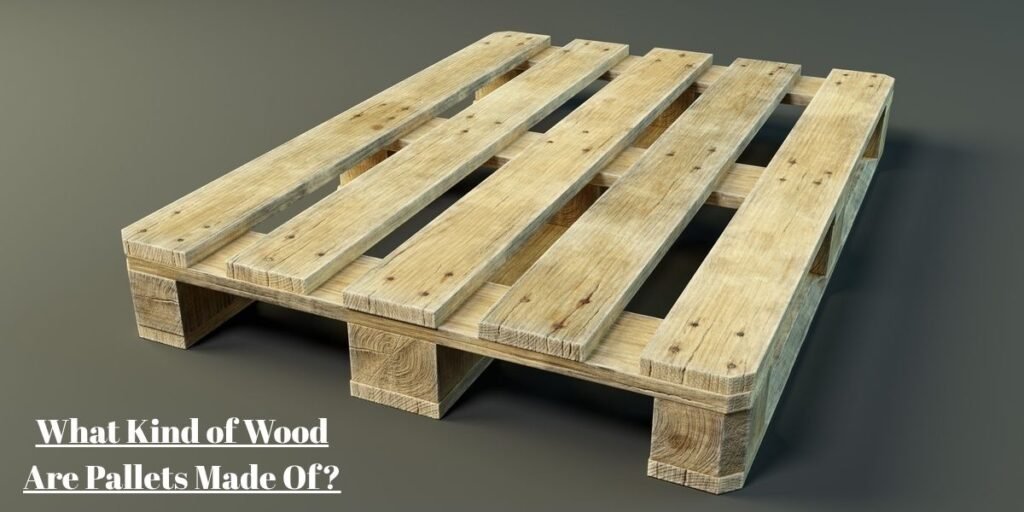
Wooden pallets are the unglamorous workhorses of global trade, moving an estimated 90% of all goods shipped in the United States at some point in their journey. Despite that ubiquity, almost nobody stops to ask what they are actually made of. Manufacturers do not build pallets from a single standard timber. Instead, they weigh regional forest resources, current lumber pricing, freight weight restrictions, and the structural demands of the cargo before a single board gets cut.
The choice between a lightweight softwood and a dense hardwood is not cosmetic. It directly changes what a shipment costs to move and how many trips that pallet will survive before it ends up as mulch or recycled fiberboard. A pallet’s real performance comes down to two things working together: the species of wood and the way the platform is engineered. Board thickness, fastener type, and stringer placement often matter as much as the wood fiber itself. Once you understand how these two variables interact, the logic behind the entire commercial pallet industry starts to make sense.
The Most Common Woods Used for Pallets
Southern Yellow Pine
Southern Yellow Pine is the default material for high-volume pallet production across North America, and it is not close. This softwood earns its dominance through a strength-to-weight ratio that few competing species can match, letting a platform carry a heavy load without dragging down the total freight weight on a truck.
The tree grows fast and grows everywhere across the American South, from East Texas through the Carolinas, which keeps industrial sawmills stocked year-round. Its open cell structure is a fastener’s best friend: drive-screw nails sink in cleanly without splitting the board, and the resulting joints hold tight through the vibration and jostling of over-the-road transit. Warehouse crews notice the difference too. A Southern Yellow Pine pallet is simply easier to lift and reposition by hand than an equivalent platform built from dense broadleaf lumber.
Research out of Virginia Tech’s Center for Packaging and Unit Load Design, working alongside North Carolina State University, found that softwoods account for roughly 81% of all lumber used in new pallet manufacturing domestically. Southern Yellow Pine leads that category by a wide margin, and its combination of fast regeneration cycles and stable commercial pricing is exactly why it has not been dethroned.
Oak
Dense hardwoods enter the picture when a platform faces extreme load limits or has to survive years of reuse inside a closed-loop logistics network. Both red oak and white oak bring high fiber density to the table, which translates into deck boards that resist bending, absorb impact, and shrug off the abrasion of repeated forklift entries far better than lighter species.
That durability comes at a price, quite literally. Oak boards add meaningful tare weight to every shipment and cost noticeably more per board-foot than standard softwood. Sawmills also tend to funnel their best oak toward furniture and flooring, which means the lumber that reaches pallet stringers is typically industrial-grade cull material rather than premium stock.
Logistics managers reach for oak specifically when a pallet needs to carry heavy machinery or survive dozens of round-trips through a distribution network. Its tight, dense grain grips fasteners with far more authority than softwood, which cuts down on the board pop that shows up in lighter species under sustained dynamic load.
Spruce, Fir, and Other Softwoods
Not every region has ready access to Southern Yellow Pine, so regional supply chains lean on spruce, Douglas fir, and hemlock to fill the gap. European manufacturers rely heavily on spruce to build standardized EUR-pallets, while operations on the North American West Coast process large volumes of Douglas fir sourced from Pacific Northwest timberland.
These species produce straight, consistent boards that dry evenly in the kiln, which cuts down on warping and cupping during storage, a detail that matters more than most buyers realize when pallets sit stacked outdoors for weeks. Sourcing locally also keeps transportation costs for raw timber down, letting regional manufacturers stay price-competitive with distributors closer to home.
This regional flexibility is what keeps the industry resilient. When Southern Yellow Pine supply tightens or pricing spikes, as it did dramatically during the 2021 lumber shortage, sawmills pivot to spruce or fir without having to redesign board dimensions or renegotiate standard load ratings.
Poplar and Other Mixed Hardwoods
Pallet manufacturing also puts lower-grade hardwoods like yellow poplar, sweetgum, and maple to productive use. These species get milled right alongside premium timber, but any board carrying visible defects or irregular grain gets diverted to the industrial packaging line instead of the furniture shop.
It is worth clearing up a common misconception here: hardwood does not automatically mean expensive, furniture-grade lumber. Industrial-grade poplar has a smooth texture, moderate density, and minimal splitting, all at a price point well below premium oak.
Mixed hardwoods give manufacturers real flexibility on the buying side, and they help forestry operations extract value from an entire harvested log rather than wasting the sections that do not meet cosmetic grading standards. Utility-grade lumber that would otherwise go unused ends up as a functional, load-bearing shipping platform.
Why Manufacturers Choose One Wood Over Another
Local Lumber Supply
Raw material sourcing tracks regional forestry almost exactly. A manufacturing plant sitting near pine plantations in Georgia or Alabama is going to build primarily with softwood, while a facility in the Appalachian foothills will process a noticeably higher share of dense hardwood simply because that is what grows nearby.
Virginia Tech’s research puts a hard number on this dependency: the U.S. pallet and container industry consumes nearly 38% of all sawn softwood and hardwood lumber produced domestically. That scale forces facilities to source within a tight geographic radius just to keep transportation costs from eating into already thin margins.
The Weight the Pallet Needs to Carry
Engineering requirements, not preference, usually settle the wood question. Lightweight consumer goods can move on a simple, economical softwood platform, while heavy automotive components or industrial equipment demand a high-density structural build.
Hardwoods offer maximum resistance to bending under sustained weight, which makes them the obvious choice for the heaviest industrial loads. Softwoods, meanwhile, provide plenty of strength for standard freight while keeping unit weight low, and that lighter tare weight helps shippers dodge fuel surcharges and stay under gross weight limits on the highway.
Cost
Commercial pallet manufacturing runs on thin margins, so raw material cost sits near the top of every purchasing decision. Softwood is generally cheaper per board-foot, and it is also gentler on high-speed industrial saw blades than dense hardwood, which extends equipment life and cuts maintenance downtime.
There is no universal best wood from a cost standpoint. It comes down to matching material cost against the performance the shipment actually needs. A low-cost softwood build makes perfect sense for a single-use export shipment that is never coming back, while a pricier hardwood platform earns its keep over dozens of domestic round-trips.
Availability and Consistency
Automated, high-speed assembly lines need lumber that behaves predictably: consistent dimensions, consistent moisture content, consistent performance. Softwood sawmills are built for exactly that kind of volume, cranking out uniform deck boards and stringers at a scale hardwood mills rarely match.
When a specific species becomes scarce or its price spikes, manufacturers adjust their lumber blend on the fly to keep the production line moving without compromising the structural standards buyers expect.
Softwood vs. Hardwood Pallets
Softwood pallets, built from species like Southern Yellow Pine, spruce, and fir, offer a lighter tare weight and a lower raw material cost. That combination makes them easy to handle in high-volume warehouse environments and a solid fit for general single-trip or multi-trip freight where weight and cost matter more than maximum durability.
Hardwood pallets, built from oak, yellow poplar, and mixed hardwood species, carry a heavier tare weight and a higher material cost. In exchange, their dense grain structure delivers noticeably better resistance to rough handling, which is exactly why they show up in heavy industrial applications and long-term rental pools where the same pallet might circulate for years.
Does Hardwood Always Make a Stronger Pallet?
Hardwood species carry higher natural fiber density, but density alone does not determine how much weight a finished pallet can actually carry. Structural engineering, fastener quality, and component dimensions play just as large a role, and in some cases a larger one.
A handful of design factors decide real-world load capacity more than wood species does on its own:
- Deck board thickness and overall cross-sectional dimensions
- The spacing between boards across the top and bottom entry decks
- Whether the platform uses a stringer design or a four-way entry block configuration
- Specifications of the fasteners themselves, including nail shank threading and metal hardness
- Moisture content of the wood at the moment of assembly
- Weight distribution across the upper surface
A well-engineered softwood pallet with thick deck boards and properly threaded drive screws will regularly outperform a thin-profile hardwood build. This is why serious shippers do not guess. They rely on tools like the Pallet Design System (PDS), developed in coordination with the National Wooden Pallet & Container Association (NWPCA), to model load dynamics and calculate precise safety factors based on actual lumber dimensions rather than assumptions about species.
Why Pallet Wood Doesn’t Look Like Furniture Lumber
Industrial lumber gets graded for structural integrity, not appearance, and that is by design. Sawmills route clear, knot-free boards toward architectural trim and fine furniture, while sound structural cuts that carry visual imperfections get diverted to packaging production.
Common traits seen in pallet-grade lumber:
- Tight knots and natural grain swirls that do not compromise strength
- Natural color variation between sapwood and heartwood
- Rougher surface texture left behind by high-speed industrial ripping saws
- Occasional minor wane or bark remnants along the board edges
None of these traits weaken the finished platform or create a safety concern. If anything, using this grade of timber reduces forest waste by giving a functional second life to wood fiber that would otherwise be discarded.
How to Tell What Kind of Wood a Pallet Is Made Of
Look at the Grain and Color
Southern Yellow Pine shows wide annual growth rings and a strong yellowish tone that is fairly easy to spot once you know what to look for. Spruce and fir run paler with much fainter grain lines by comparison. Oak is its own animal entirely, with distinct ray patterns and visibly open pores running through the board. Poplar tends to show straight, even graining paired with light green or dark heartwood streaks that most other species do not produce.
Check the Weight and Hardness
Weight tells you almost everything you need to know the moment you lift a platform. Oak and other dense hardwood builds feel noticeably heavier than a softwood pallet of identical dimensions, and the difference is obvious even to someone who has never handled lumber professionally. A simple fingernail test helps too: press into the board surface, and softwood will yield slightly under the pressure while dense hardwood barely gives at all.
Don’t Rely on the Pallet Mark Alone
Here is a detail that trips up a lot of people: the stamp on a wooden pallet has nothing to do with the species of wood underneath it. The codes printed on stringers or blocks identify the owner network, the facility registration number, and the phytosanitary treatment method the pallet went through, none of which tells you what tree that lumber came from.
What the HT Mark on a Pallet Actually Means
The HT mark stands for Heat Treated, and it confirms that the solid wood components reached a minimum core temperature of 56°C (132.8°F) for at least 30 minutes during processing.
This requirement comes from international plant health regulations set by the International Plant Protection Convention (IPPC) under its ISPM 15 standard, which governs wood packaging material moving across international borders. The heat treatment kills wood-boring insects and larvae before the lumber can travel overseas, which is a genuinely important safeguard against invasive species spreading through global trade.
What the HT stamp does not tell you is anything about wood species, density, or strength rating. It is purely a biosecurity certification, and treating it as a proxy for quality is one of the more common mistakes buyers make.
What Is the Best Wood for a Pallet?
There is no single species that wins across every shipping scenario, and anyone who tells you otherwise is oversimplifying. Choosing the right timber always comes down to balancing freight cost, structural load requirements, and how many trips the platform needs to survive.
As a practical guide:
- Southern Yellow Pine: Best for general domestic shipping, automated assembly lines, and anywhere minimizing tare weight is the priority.
- Oak: The right call for heavy machinery, high-impact warehouse environments, and long-term rental pools operated by networks like CHEP or PECO.
- Mixed Hardwoods: A cost-effective option for heavy-duty shipping in regions where broadleaf timber is more abundant than softwood.
Common Questions About Pallet Wood
Are Most Pallets Made From Pine?
Softwoods, and Southern Yellow Pine in particular, make up a substantial share of North American pallet inventory. That said, regional species usage still shifts depending on what is growing and available locally, so most pallets are pine is a reasonable generalization rather than an absolute rule.
Are Pallets Made From Hardwood or Softwood?
Both, and the industry has good reason for using each. Softwoods keep freight weight down for general shipping, while hardwoods provide the extra density needed for heavy loads and demanding, high-reuse supply chains.
Are Oak Pallets Stronger Than Pine Pallets?
Oak carries higher natural density, but a pallet’s real-world capacity depends just as much on board thickness, fastener design, and overall structural geometry. A well-built pine pallet can outperform a poorly engineered oak one, so density alone is never the full story.
Can You Identify Pallet Wood by Looking at It?
Grain pattern, surface color, and weight all offer useful clues, and an experienced eye can usually narrow it down. That said, weathering, accumulated dirt, and pallets built from mixed species make a confident visual identification difficult without proper lab testing.